Environmental follow‑up
and mitigation measures
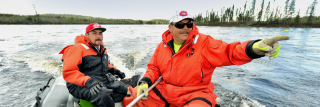
Environmental follow‑ups
The overall objectives of the environmental follow‑up program for the Eastmain‑1‑A and Sarcelle powerhouses and Rupert diversion project are to monitor environmental changes and verify the effectiveness of the mitigation measures with a view to making the necessary adjustments, if required.
The follow‑up program is designed to comply with the commitments undertaken by Hydro‑Québec in the Environmental Impact Statement and to satisfy the conditions set out in the government approvals.
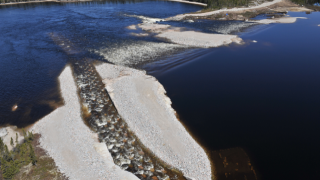
Fish pass used by various species of fish including sturgeon
The most abundant species in the Rupert are walleye, northern pike, lake sturgeon, lake whitefish, longnose sucker, white sucker and anadromous lake cisco. The two species most valued by the Cree are the sturgeon and cisco. Since 2007, an extensive fish follow‑up program has been used to ascertain whether the instream flow ensures the availability of spawning habitats and supports successful reproduction in the lower reaches of the river. Fish populations and habitats in the Rupert diversion bays and increased‑flow section are also regularly monitored, in particular for lake trout, brook trout, lake whitefish, walleye, white sucker and longnose sucker.
Sturgeon
Fifteen sturgeon spawning grounds have been identified in the stretches of the Rupert affected by the project: two were flooded when the diversion bays were impounded, and a third, downstream of the planned weir at KP 290, was disturbed by the construction of the structure and the reduced flow of the Rupert. These three spawning grounds were redeveloped close to their previous location.
The sturgeon follow‑up focused on the downstream migration of larvae and juveniles in spring, the spawning process and the effectiveness of the implemented mitigation and compensation measures. It should be noted that the lake sturgeon is at risk of becoming a threatened or vulnerable species.
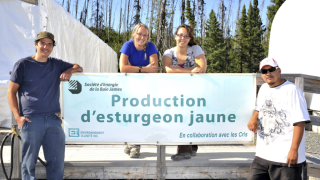
Lake sturgeon production at the Eastmain‑Sarcelle‑Rupert jobsite
Cisco
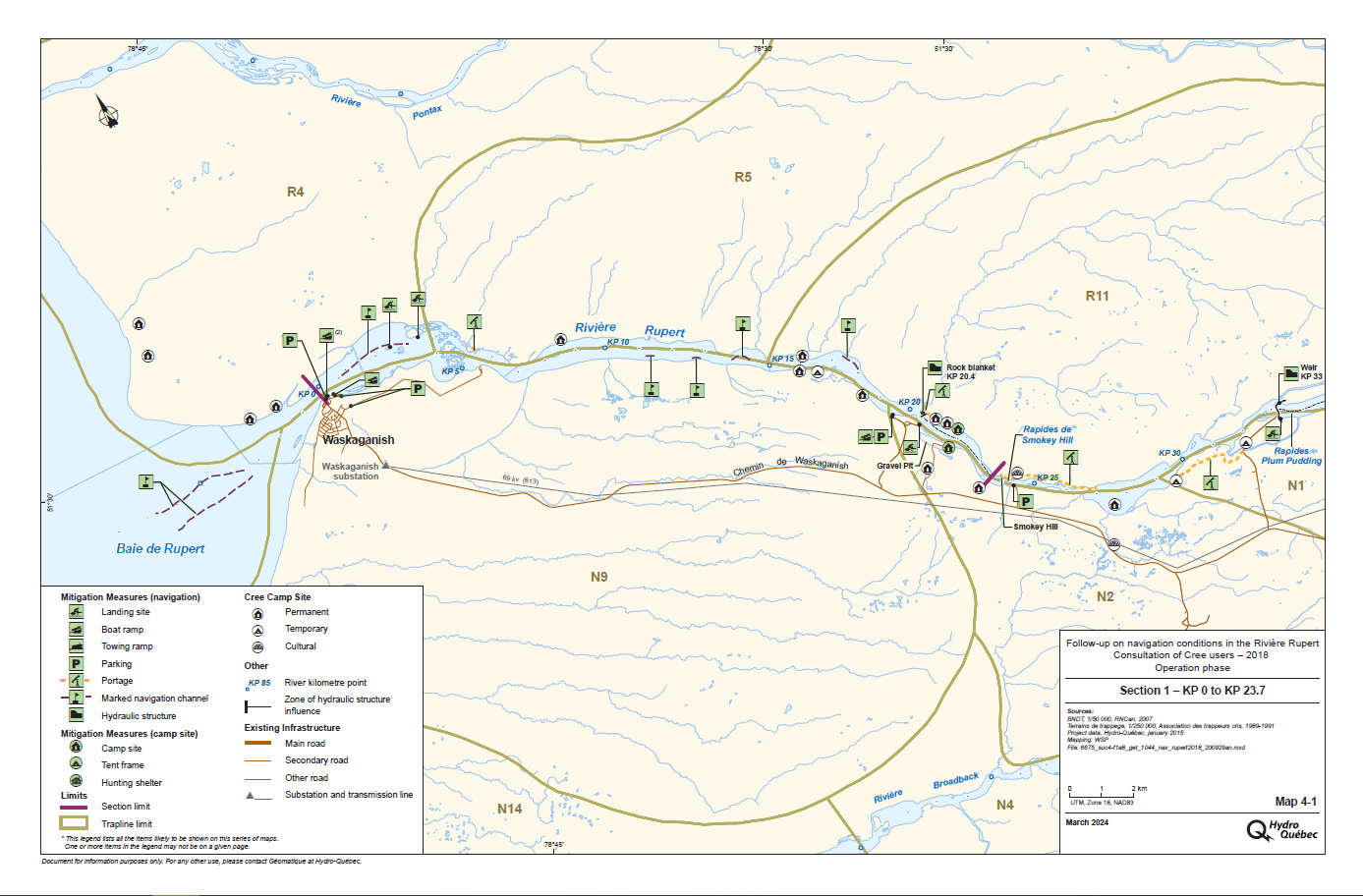
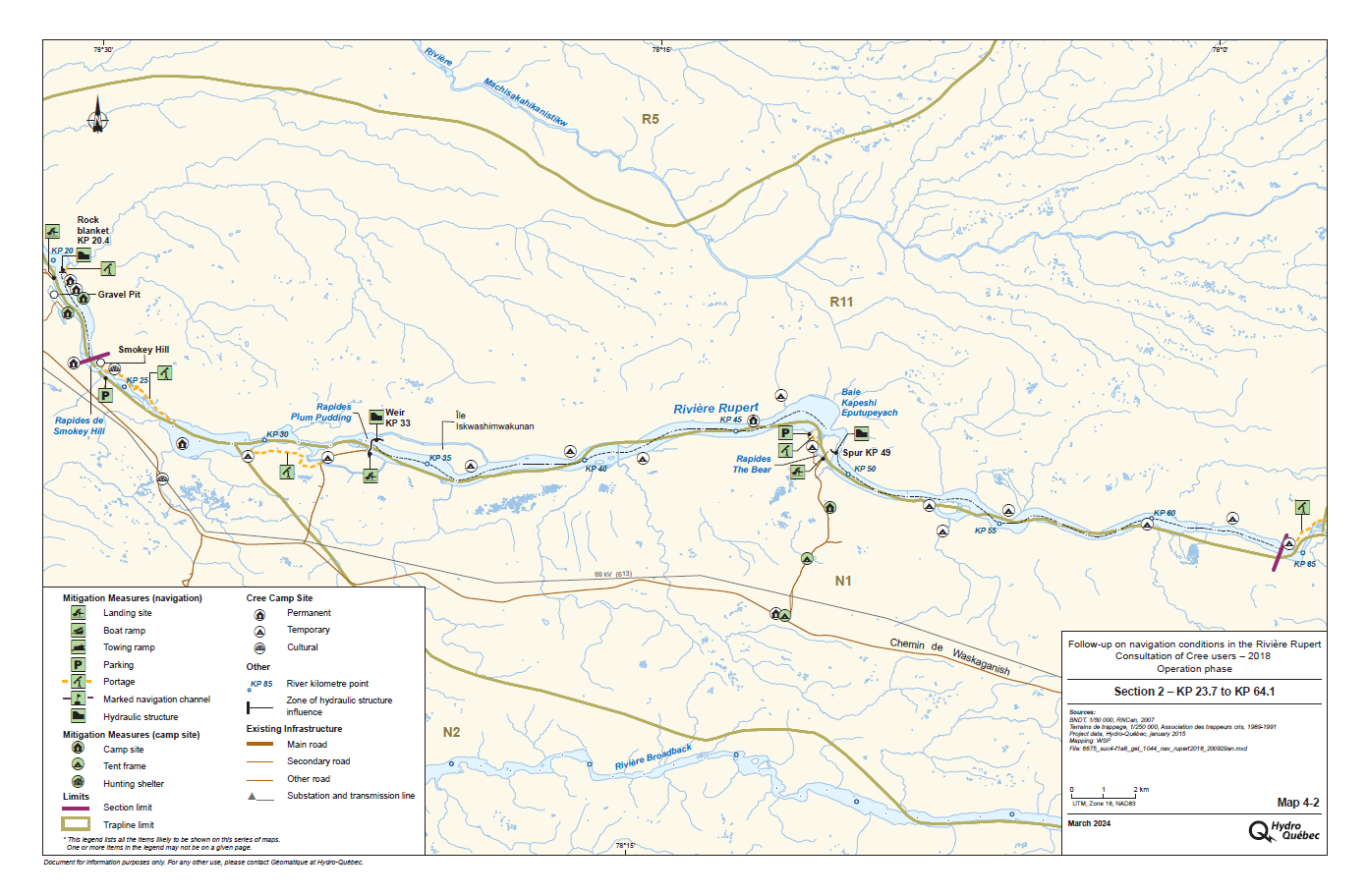
Ciscos swim up the Rupert to the Smokey Hill rapids, which are impassable for the vast majority of fish. At the foot of these rapids, the Waskaganish Crees gather in late summer to fish for ciscos and cook them by smoking. Ciscos lay their eggs in November on the riverbed, between KP 14 and KP 24. The eggs develop over winter and hatch in May and June. The cisco larvae are then carried by the current to the Baie de Rupert, where they feed and develop.
The Rupert cisco spawning ground is the largest known spawning ground for this species in the Baie-James territory. This spawning ground was preserved with the instream flow and the installation of a rock blanket to maintain average summer water levels. The Rupert cisco population is regularly monitored. The downstream migration of larvae in spring using drift nets is studied, as is the spatial distribution of spawners on the spawning grounds in fall, among other aspects.
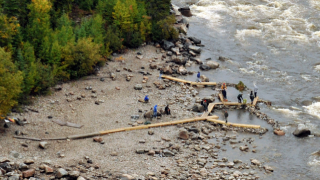
Smokey Hill rapids
Large quantities of terrestrial organic matter were submerged when the diversion bays were created. Bacterial decomposition of this organic matter causes release of methylmercury. As it is assimilated by all aquatic organisms, this form of mercury accumulates at every level of the food chain. This predictable increase in mercury levels is temporary. Changes in mercury levels in fish were monitored until 2021, and the data was transmitted to public health authorities. Hydro‑Québec also created a fish consumption guide in collaboration with the Cree Board of Health and Social Services of James Bay.
The Rupert diversion has slightly altered the characteristics of the water, mainly in the diversion bays and the river. However, the water quality remains excellent to sustain aquatic life and the various uses of the Rupert. Regular monitoring of water quality in the Rupert and Nemiscau rivers measures changes in water color, turbidity and suspended solids near Cree camps.
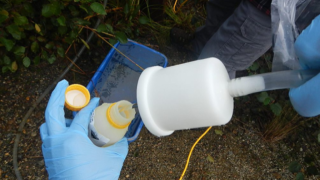
Groundwater sampling
Two morphologically similar caribou ecotypes frequent the area of the facilities: barren‑ground caribou and woodland caribou. Both remain in the area year‑round and use the diversion bay habitats. These caribou, which are scarce and sensitive to disturbances, are protected species in Québec and Canada. A follow‑up was conducted from 2008 to 2011 to determine the number and distribution of caribou during the work, regardless of their ecotype. Inventories were done in winter when caribou tracks in the snow made it easier to locate them. Information on woodland caribou was also gathered from tallymen.
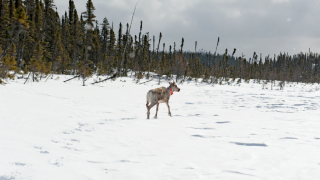
Caribou
Seventy‑nine active beaver colonies were identified during aerial surveys along the Rupert diversion bay section in fall 2007 with six tallymen. A dozen bears were also seen. The tallymen continued the program launched in 2007, moving the animals when necessary to prevent them from being lost when the diversion bays were flooded.
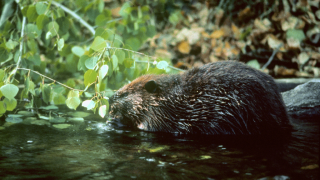
Beaver
Small wildlife includes marten, hare, mink, North American porcupine, river otter, fox, red squirrel, Canada lynx, spruce grouse and willow ptarmigan. Four years after the impoundment of the diversion bays, a winter aerial survey of small wildlife trails was conducted in the new riparian environments of the diversion bays and of the Rupert to assess habitat use.
After the Rupert was diverted, vegetation colonization of the diversion bay banks and changes in riparian and aquatic vegetation were monitored along the lower Rupert and in the estuary and Baie de Rupert. Special attention was paid to special‑status plant species, such as golden hedge‑hyssop (Gratiola aurea) and Robinson’s hawkweed (Hieracium robinsonii).
A follow‑up of eelgrass beds on the northeast coast of Baie James (James Bay) was also done. These highly desirable habitats for waterfowl, which also provide shelter for small fish, were observed to be declining in 1999. The beds began to recover in 2000, and their development continued to be monitored from 2009 to 2019.
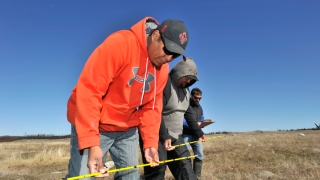
Wildlife monitoring

Scientific committee
In 2009, before the Rupert diversion was commissioned, Hydro‑Québec formed a scientific committee to monitor the instream flow in order to comply with conditions 4.2.2.2 and 4.2.3.3 of the authorization issued under subsection 35(2) of the Fisheries Act. The committee reviewed the content of the following studies and made recommendations based on the results:
- Lake sturgeon larval drift
- Anadromous lake cisco in the Rupert
- Spawning of target species at model sites
- Follow‑up of target species juvenile populations
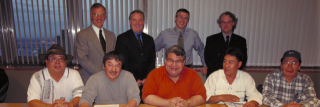
End of Boumhounan Agreement negotiations
Government approvals
The Boumhounan Agreement
The environmental impact assessment and its complement, published in 2004 and 2005, respectively, the construction authorization certificates issued by the Ministère de l’Environnement, de la Lutte contre les changements climatiques, de la Faune et des Parcs (MELCCP) (at the time, the Ministère du Développement durable, de l’Environnement et des Parcs [MDDEP]), Fisheries and Oceans Canada (DFO) and Transport Canada (TC), and the Boumhounan Agreement provided the basic framework for the development of an environmental follow‑up program and mitigation measures to cover a period of 16 years.
In compliance with the conditions set out in the authorization certificates, the content of the impact assessment and the general requirements of the James Bay and Northern Québec Agreement (JBNQA), Hydro‑Québec implemented an environmental monitoring and follow‑up program and a series of mitigation measures. The Boumhounan Agreement also contains various measures designed to reduce the project’s impact on Cree communities and sets out the terms of collaboration between the Crees, Hydro‑Québec and the Société d’énergie de la Baie‑James (SEBJ).
Components of the environmental follow‑up program
- Biophysical environment – hydrology and hydraulic regime, geomorphology, thermal regime, ice cover and water quality
- Aquatic environment – fish populations, habitats and locations enhanced for fish
- Terrestrial environment – vegetation, land and semi-aquatic wildlife and birds
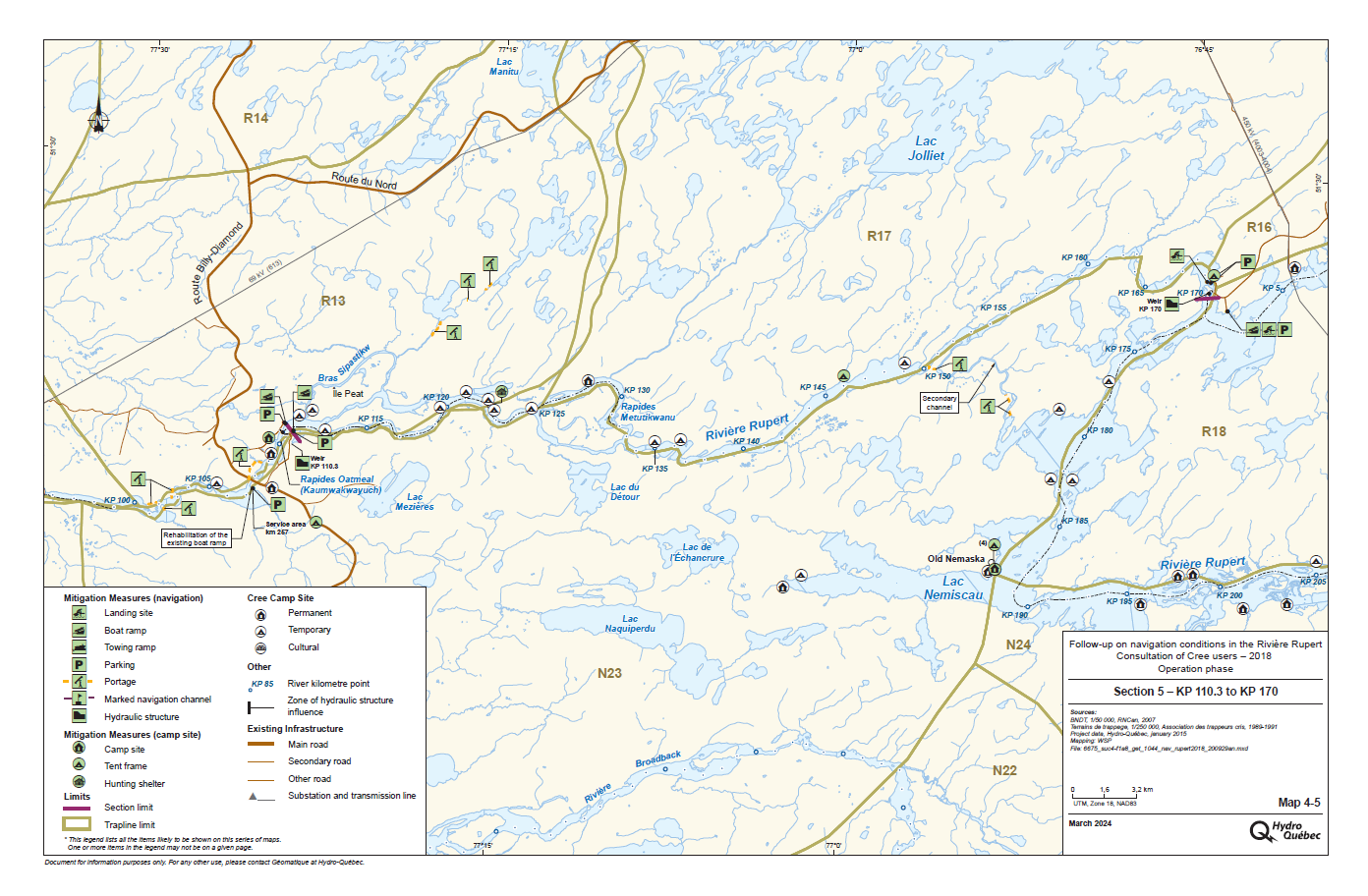
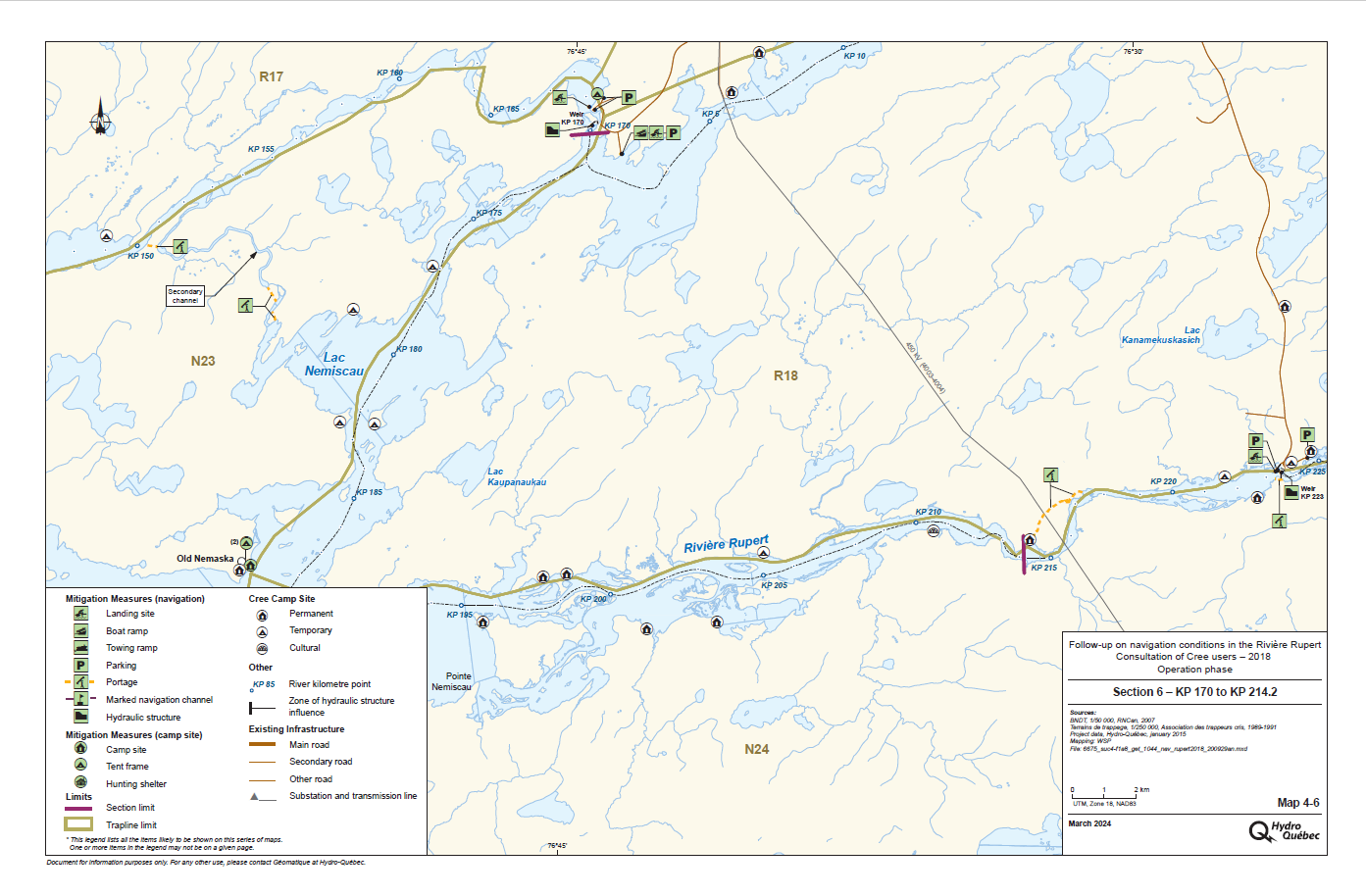
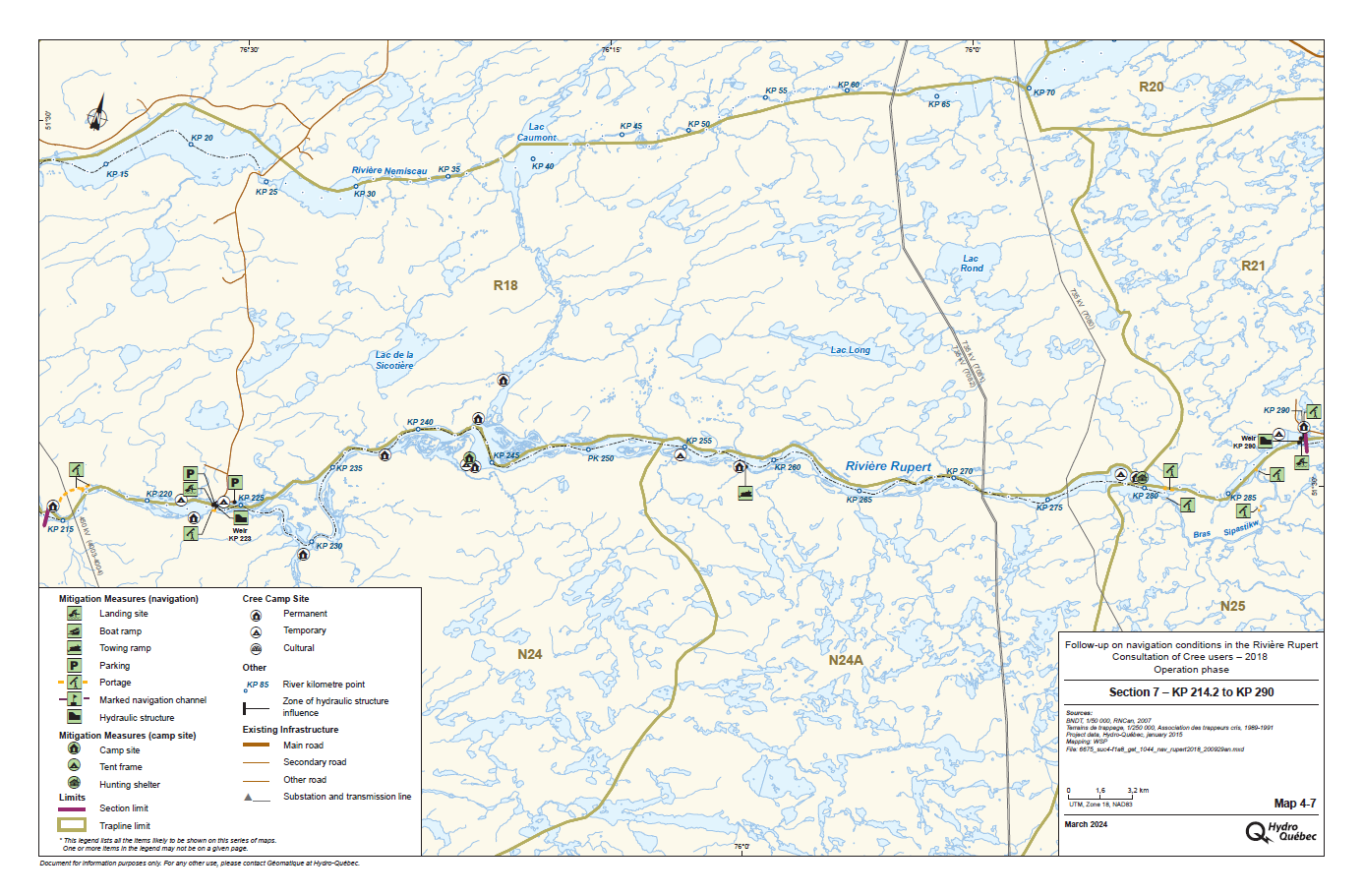
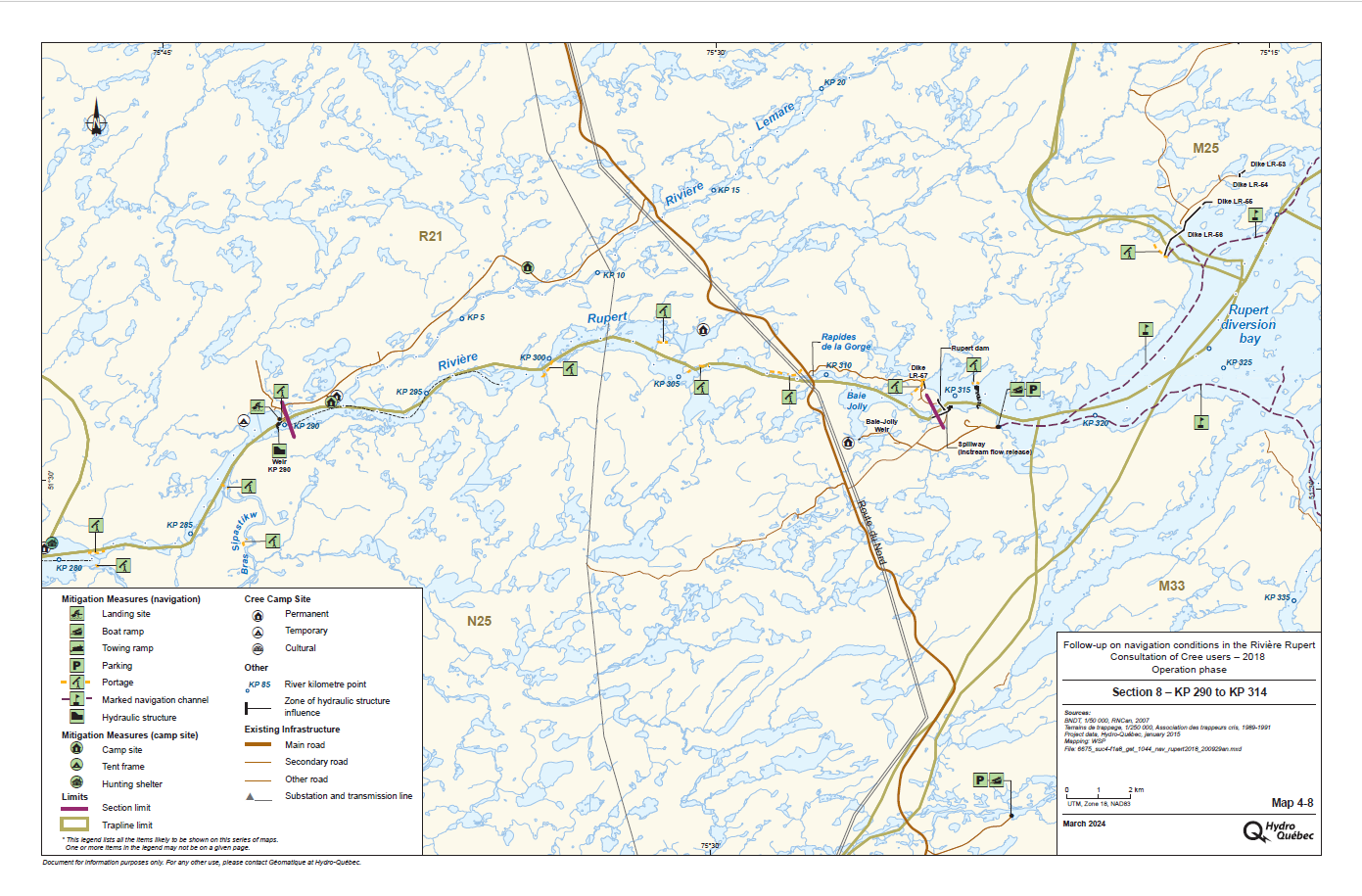
- Human environment – society and culture in the Cree communities, public health and mercury, land use, navigation, landscape, recreation and tourism, and economic spinoffs
Mitigation measures
Hydro‑Québec developed mitigation measures to ensure the Eastmain‑Sarcelle‑Rupert complex blends in as harmoniously as possible with its environment.
- Prior to impoundment, more than a quarter (51 km2) of the Rupert diversion bay area was cleared to facilitate navigation, land use and water flow.
- The clearing work was done by Cree businesses and tallymen from 2007 to 2009.
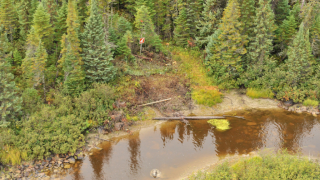
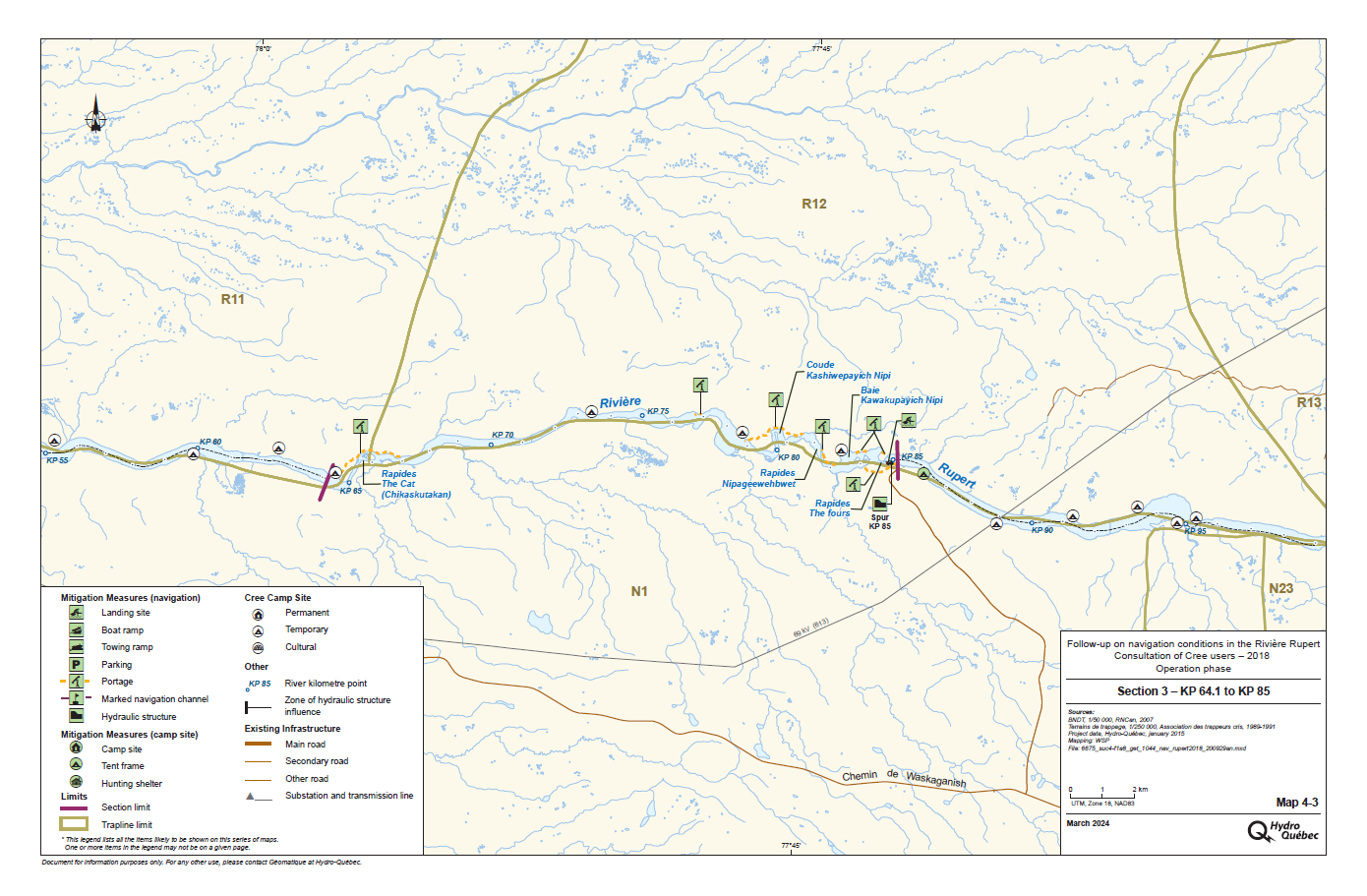
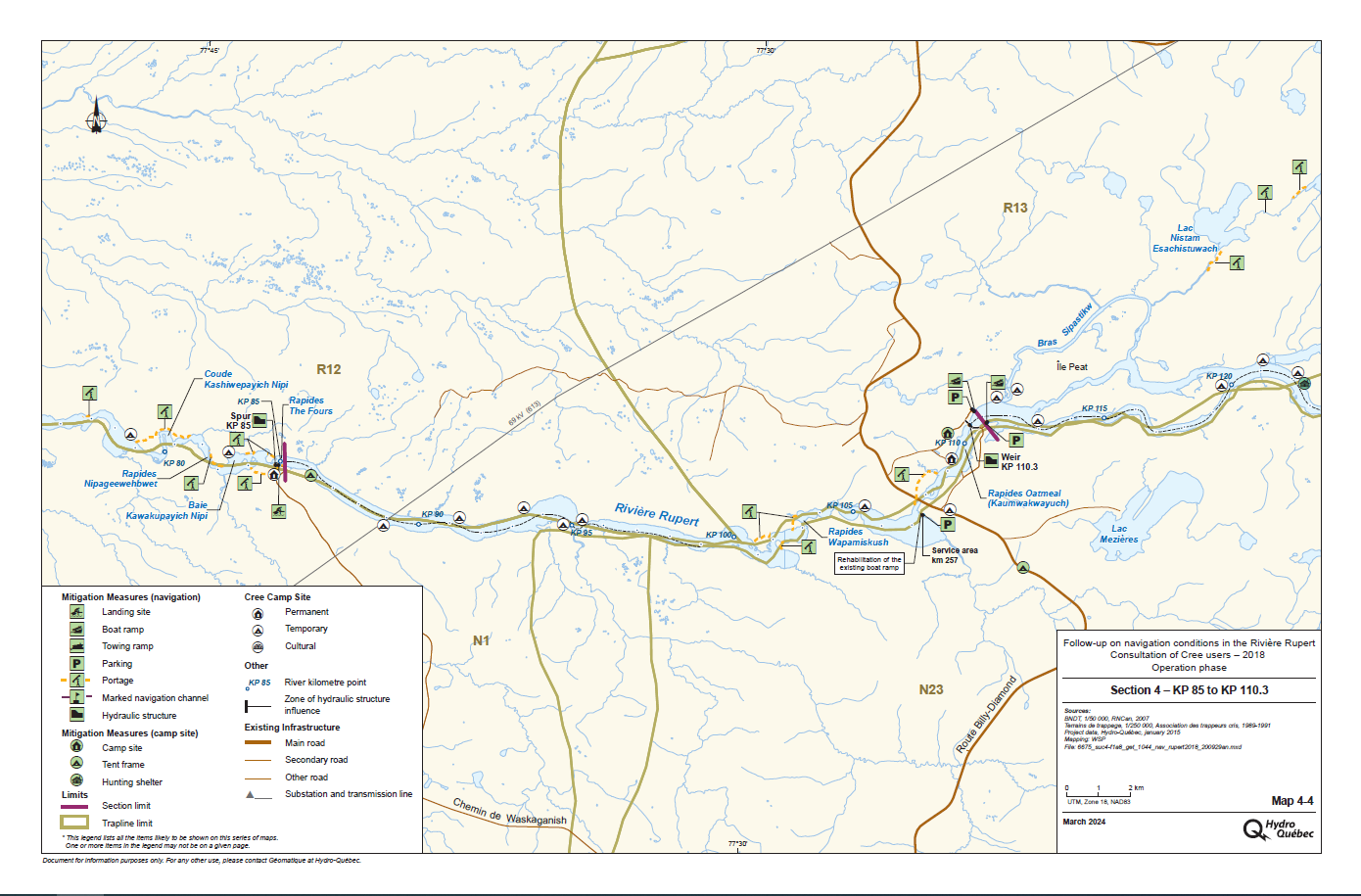
Portage at KP 31 of the Rupert
- Some 45,000 m3 of merchantable timber was recovered from the Rupert diversion bays. In accordance with the Boumhounan Agreement, the recovered timber was donated to the Waswanipi Cree sawmill.
- Some 10,000 m3 of merchantable timber was also recovered in the work areas outside the diversion bays.
The change in the hydrological regime caused by the Rupert diversion could have accentuated the erosion already affecting the banks of the Grande Rivière estuary. To prevent the effects of such erosion, work was done in at‑risk areas at the foot of the slope on left bank from 2007 to 2009.
- The seeding of nearly 400 hectares of exposed banks downstream of Rupert dam with grasses, mainly by aerial means, significantly slowed the erosion process and improved the wildlife potential of the banks.
- The work took place after the Rupert diversion, in 2010 and 2011.
In Waskaganish, riprap was installed to stabilize a stretch of bank upstream and downstream of the village’s water intake. This work was done at the same time as the construction of the new drinking water plant.
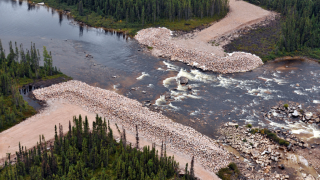
Example of bank stabilization
Since 2009, the village of Waskaganish, which gets its water supply from the mouth of the Rupert, has been equipped with a water treatment plant that will meet the needs of the population for the next 20 years.
- Temporary work areas, such as roads, sand pits and quarries, were restored as they were decommissioned. This was done in several stages. They were cleaned up and made level, slopes were stabilized, compacted soil was scarified and natural drainage was restored.
- The restored areas were then hydroseeded with herbaceous, graminaceous and leguminous plants over an area of almost 390 hectares.
- More than six million trees and shrubs were also planted, mainly green alder, jack pine and black spruce.
- In some cases, goose-hunting areas were developed in collaboration with Cree users.
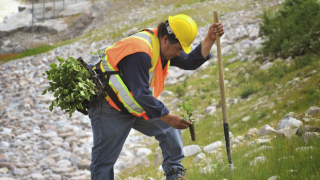
Planting at the Rupert diversion jobsite
- After the diversion bays were impounded, wood debris rose to the surface and moved with the winds, waves and ice action, washing up on the shores or at the bottom of the bays.
- A follow‑up was conducted from 2010 to 2015 to characterize the movement and accumulation of wood debris.
- A wood debris clean‑up program was carried out in collaboration with the tallymen to facilitate navigation, especially in the areas where land had been cleared.
Helicopters were flown over the Rupert diversion bays during impoundment to identify and monitor areas where animals could take refuge, such as temporary islands. Animals in distress were captured and moved with the help of tallymen.
More than 30 bird species share the aquatic and forest habitats that stretch from the Baie de Rupert to the diversion bay section. A number of rare species can be found here, as well as species whose range limit extends as far as this area: the yellow rail, marbled godwit, sandhill crane, little gull, bald eagle and Nelson’s sparrow. Twenty‑seven species of ducks and three species of geese were identified. In 2003, marbled godwit nesting was confirmed for the first time in Québec. Hydro‑Québec took steps to mitigate the impact of the diversion bays on the habitat of several bird groups.
Ponds for the Bonaparte’s gull
Although the Bonaparte’s gull is a type of aquatic bird, it nests in trees. It builds its nest with small branches, twigs, moss and lichen in black spruce or tamarack trees. The species reproduces in small colonies of 4 to 20 individuals. The young leave the nest at around a week old and continue to mature on a nearby pond. Pools were excavated in a treed peatland in the tailbay to attract Bonaparte’s gull pairs. A follow‑up was done to check whether these pools are used
Nesting platforms for the great grey owl
The great grey owl does not build a nest. It borrows that of other birds of prey or uses the flattened tops of large trees. One has even been seen nesting on the roof of a barn in Finland. In Québec, only three great grey owl nests have been discovered. Five artificial platforms were installed on trees along the edges of the largest wetlands to encourage great grey owl nesting in the Rupert diversion bays. A follow‑up was done to check whether these platforms are used.
Bird inventory
From 2007 to 2021, inventories were conducted along the Rupert in the diversion bay section and in control plots to monitor changes in waterfowl, raptor and forest bird populations. Inventories of short-eared owl nests were also conducted in the Rupert tailbay and on the islands of Lac Nemiscau from 2012 to 2016. In addition, information was gathered on the use of the Rupert diversion bays, Opinaca reservoir and Boyd and Sakami lakes by migrating and moulting Canada geese.
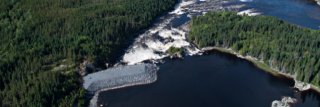
Spur in the Rupert
Annual environmental activity reports
Environmental activity reports summarize the environmental activities relating to the Eastmain‑Sarcelle‑Rupert complex. These environmental activities stem from provincial and federal approvals obtained in 2006 and 2007, as well as from the Boumhounan Agreement, which sets out the framework for the construction of these facilities. Each report has the following headings: environmental follow‑up and mitigation measures program, Cree traditional knowledge, environmental follow‑ups, mitigation measures, environmental compliance assurance, government approvals, scientific committee, Boumhounan Agreement and upcoming activities.
Consult the 2007–2023 environmental follow-up program [PDF 1,99 MB]Environmental activity report 2016 [PDF 21,39 MB] (French only)
Environmental activity report 2015 [PDF 26,67 MB] (French only)
Environmental activity report 2014 [PDF 30,58 MB] (French only)
Environmental activity report 2013 [PDF 28,17 MB] (French only)
Environmental activity report 2012 [PDF 57,51 MB] (French only)
Environmental activity report 2011 [PDF 63,18 MB] (French only)