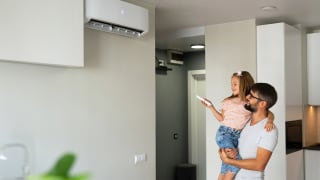


When winter sets in, you might think it’s better to turn off your heat pump and use baseboard heaters. That’s a common misconception! Your heat pump is designed to work in cold weather, and it’s another way to significantly lower your heating costs without sacrificing comfort.
Why keep your heat pump on all winter?
- It uses up to three times less energy than baseboard heaters for the same amount of heat.
- It’s built for our climate: some high-efficiency models perform extremely well down to ‑25°C and even ‑30°C.
- Turning it off makes your baseboard heaters work harder, which can increase your bill.

Did you know?
A heat pump can reduce your heating-related electricity use by 25% compared to baseboard heaters alone.
A few essential tips
- Select heating mode (never auto, which could turn on the air conditioning).
- Set the heat pump to about 21°C for comfort and the baseboard heaters to 2–3°C lower (18 or 19°C, for example) so they only turn on when it’s very cold.
- Adjust the set temperature gradually to avoid sudden changes and save energy.
- Always keep the heat pump on.
- Make sure the area around the outdoor unit is clear by removing snow and ice.
A clogged filter can make your heating system 10‑30% less efficient, leading to a higher electricity bill and affecting the air quality in your home.
During peak demand events
If you have a wall-mounted heat pump and want to reduce your electricity use during peak demand events, lower the set temperature of your baseboard heaters, especially in unoccupied rooms. This helps keep the rooms you’re using comfortable.
FormeIn short, keep your heat pump on all winter (in heating mode) and set the temperature on your baseboard heaters so they only turn on when it’s very cold. This is the best way to significantly lower your energy use and your bill while keeping your home comfortable.