
Dual energy for sustainable decarbonization
Electricity and natural gas: Two energy sources for heating at the lowest possible cost!


Hydro‑Québec has joined forces with Énergir and Enbridge Gaz Québec to fight climate change by proposing a dual‑energy offer. The idea is simple: using electricity to meet over 70% of heating requirements and natural gas as an auxiliary source. Find out more about this collaborative effort.
Who is the offer geared to?
Énergir and Enbridge Gaz Québec residential customers with natural gas central heating systems who want to lower both their energy bills and their greenhouse gas (GHG) emissions.

What does the offer consist of?
The dual‑energy offer meets building heating requirements through a combination of two energy sources: electricity for the most part, and natural gas during periods of extreme cold, when pressure on the power grid is at its highest. In other words, it consists in using the right energy source at the right time and at the lowest possible cost. It’s win‑win all around, since it benefits not just customers, but society as a whole!
Benefits for you...
By opting to convert to a dual‑energy (electricity and natural gas) heating system, you’ll enjoy:
-

Access to financial assistance covering a significant portion of the purchase and installation costs of the dual‑energy heating system
-

Recurring savings on your energy bill, largely thanks to Hydro‑Québec’s advantageous Rate DT
-

Support throughout the conversion process
-

As needed, work to adapt Hydro‑Québec’s distribution system, performed at no charge to you
... and for society
You’ll also help:
-

Fight climate change by using electricity produced from clean and renewable energy sources to meet most of your heating needs
-

Reduce pressure on the power grid by using natural gas as your heat source during winter peaks
Financial assistance
Substantial financial assistance is provided under a partnership between the Québec government and Hydro‑Québec, as part of the Chauffez vert program, in collaboration with Énergir and Enbridge Gaz Québec for the purchase and installation of a dual‑energy system. There are two scenarios:
Forced‑air central heating system
You are eligible for financial assistance if you add an electric central heat pump to your natural gas heating system, regardless of whether or not you decide to replace your gas boiler at the same time.
For detached, semi‑detached or row houses or condo units with a separate heating system, financial assistance of $7,300 is available for Énergir customers and $6,800 for Enbridge Gaz Québec customers.
Duplex or triplex: financial assistance is also available.
Hot water heating system
Financial assistance is available to switch to a dual‑energy (electricity and natural gas) heating system in a detached, semi‑detached or row house, a condo unit with a separate heating system, or a duplex, triplex or other multi‑unit building.


How can you take advantage of this offer?
Take advantage of this offer
Consult your natural gas supplier for details and to take advantage of this offer.
Énergir customer
Find out about the Énergir offerOr call 1 844 480‑1313
Enbridge Gaz Québec customer
Find out about the Enbridge Gaz Québec offerOr call 1 819 771‑8321
Join in the fight against climate change by helping Québec reach its GHG emissions reduction targets!
Hydro‑Québec’s partnerships with Énergir and Enbridge Gaz Québec aim to significantly reduce greenhouse gas (GHG) emissions at the best possible cost for Québec society by letting you use the right energy source at the right time.
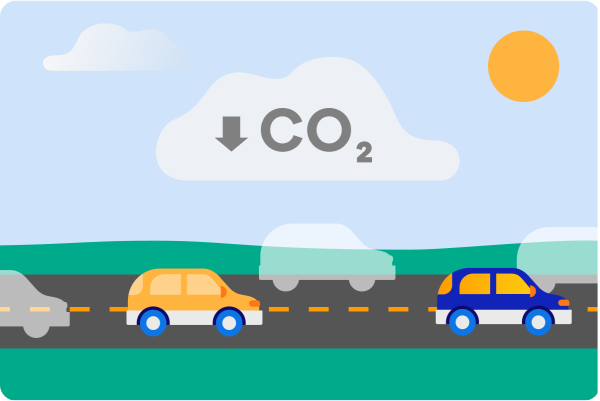
Reduction of 540,000 tonnes of CO2 equivalent per year by 2030,
or roughly the emissions from 125,000 vehicles*
* Calculation based on average fuel consumption of 10.7 L/100 km for a vehicle traveling 20,000 km annually.
More specifically, it maximizes the amount of electricity used to heat buildings while cutting the natural gas consumption of participating households by over 70%. The two energy sources work together to optimally meet energy needs during cold snaps.
In fact, if heating were to be 100% electrified, this would add nearly 2,000 megawatts (MW) to peak demand by 2030, which is more than the capacity of all four generating stations in the Romaine complex! Dual energy makes it possible to lower electricity demand at the very moments when the grid is subject to the most pressure. This in turn helps Hydro-Québec avoid having to make additional investments or expenditure to meet peak demand.
This solution thus represents a concrete means of acting now to fight climate change while limiting the impact on the environment and society.
Frequently asked questions
The dual‑energy offer for sustainable decarbonization is geared to Énergir and Enbridge Gaz Québec residential customers with a forced‑air or hot water central heating system that runs on natural gas. Participants must purchase and install new equipment leading to the exclusive use of a dual‑energy heating system. The ultimate goal is to increase the amount of electricity used in the heating of buildings.
No. The offer is not available to Hydro‑Québec customers who already heat with electricity or a dual‑energy system. However, other programs are available to these customers. See the offers.
Residential customers who opt for dual‑energy (electricity and natural gas) heating benefit from Hydro‑Québec’s Rate DT, which is available to all households that have a dual‑energy system.
The offer is designed as an incentive for converting existing heating systems to dual energy. Financial assistance for the purchase and installation of the necessary equipment is provided under a partnership between the Québec government and Hydro‑Québec, as part of the Chauffez vert program, in collaboration with Énergir and Enbridge Gaz Québec. What’s more, Hydro‑Québec’s Rate DT, aimed specifically at customers who use dual‑energy heating systems, will apply to the electricity used. Rate DT lets customers enjoy recurring savings if they use the right energy source at the right time, based on the outdoor temperature.
To help reduce greenhouse gas (GHG) emissions, since heating buildings is a major source of emissions that directly impact climate change. The collaboration with, Énergir and Enbridge Gaz Québec aims to decrease the amount of natural gas consumed by program participants by more than 70%, thereby helping Québec reach its GHG emissions reduction target set in the 2030 Plan for a Green Economy. Under the Plan, Québec aims to cut its emissions by 37.5% by 2030 compared with 1990 levels.
- Heating buildings using only electricity would put significant pressure on Hydro‑Québec’s grid during winter peak periods.
- Dual energy is an excellent way of maximizing the use of electricity in building heating while limiting the impact on the grid during peak periods. Lowering the demand for electricity at these specific times makes it possible to optimize operations at the very moments when the grid is subject to the most pressure. This in turn will help Hydro‑Québec avoid having to make additional investments or expenditure to meet demand during consumption peaks.
- Dual energy is an option that can help accelerate the energy transition. It allows for some of the demand during peak periods to be curtailed rather than shifted, since heating is provided by another energy source. Other types of electrical heating that address demand, such as thermal storage systems, shift demand too off‑peak periods.
- Between 2022 and 2030, the dual‑energy offer will save Québec nearly $1.7 billion compared to an all‑electric scenario, which would have a much greater impact on electricity rates.
Contact your natural gas supplier.
You’ll receive full support throughout the conversion to dual energy.
Obtain bids.
Specialized contractors will submit bids that include the financial assistance for which you are eligible.
Have your equipment installed.
The selected contractor will contact you to book an installation date.
Save money as you reduce your heating footprint!
You'll benefit from Hydro‑Québec's Rate DT and tips on how to maximize your savings.