Meters
Types of meters, readings of electricity use data and frequently asked questions.
On this page
Types of meters
Communicating meter
A meter with two‑way communication that can receive and send information by radio‑frequency or through a telephone connection. This enables it to interact with an advanced metering infrastructure, in particular to collect electricity consumption data.
Costs associated with its use
The communicating meter is part of Hydro‑Québec's basic service and is free for all customers. The main advantage of this technology is that the meter remotely forwards the electricity‑use data to our systems.
Non-communicating meter
An electricity meter that does not emit radio‑frequencies and therefore must be read on site by a Hydro‑Québec employee.
Costs associated with its use
A one‑time $99 installation fee applies, followed by a monthly $3 fee (prorated according to your billing cycle). In the interest of fairness, Hydro‑Québec must ask customers who choose this option to cover the additional manual reading costs associated with the use of a non‑communicating meter.
At any time, you can ask to have the non‑communicating meter replaced free of charge with a communicating meter. To do so, simply contact our customer services.
Show details
Detailed conditions
You can choose to have a non‑communicating meter installed, provided all the prerequisite conditions have been met. This option entails having a Hydro‑Québec employee travel to your premises to obtain your consumption data. Note that only the account holder can make this request.
More about the prerequisite conditions for installing a non‑communicating meter in the Conditions of service [PDF 1.5 MB].
If you opt for a non‑communicating meter, your electricity bill will be based on your estimated electricity use during the periods between scheduled meter readings.
In order to manually read a non‑communicating or old‑generation meter and bill you for your actual consumption, Hydro‑Québec must have access to the meter at all times.
Manual reading frequency
- For contracts under which only energy consumption is billed: at least once a year.
- For contracts under which power demand and energy consumption are both billed: approximately every 30 days.
- For distant and/or hard‑to‑reach installations: at least once a year.
- For meters that are inaccessible or to which Hydro‑Québec does not have the accesses provided for in Section 14.3 of the Conditions of Service [PDF 1.5 MB]: no minimum frequency applies.
A proper meter reading guarantees that you receive a bill based on your actual consumption as opposed to an estimate. Ensure that Hydro‑Québec's personnel can access your meter.
Self-reading of a non-communicating meter
You can send us your reading in three ways:
- Online, in your Customer space
- Online, in the Meter reading form
- By phone, at 1 877 385‑8464
Industry Canada and Measurement Canada
Meters must meet strict requirements to ensure that they accurately measure the electricity used. To be used for billing purposes, the meters installed by Hydro‑Québec must be approved by Measurement Canada and have successfully passed Hydro‑Québec's certification process, which is recognized as one of the most stringent in North America.
The certification process involves 24 physical and electrical tests: temperature variation, electrical discharge, impact from different angles, etc. Hydro‑Québec performs these tests to ensure that the meters measure and send our customers' energy consumption data reliably and very safely, regardless of the weather.
Hydro‑Québec must therefore periodically remove its meters for testing or replacement, to ensure that they remain accurate and compliant with the Electricity and Gas Inspection Act and its regulations.
Frequently asked questions
Billing
Unlike communicating meters, which are part of Hydro‑Québec's basic service and can be read remotely for billing purposes, non‑communicating meters must be read manually. From now on, only customers who have opted for non‑communicating meters will have their meters read manually.
The costs associated with the choice of a non‑communicating meter are based on the user‑pay principle: it would be unfair to charge these costs to all of Hydro‑Québec's customers.
It is important to note that customers can opt for the free basic service and have their non‑communicating meter replaced with a communicating meter at any time.
No. A Hydro‑Québec meter—be it electromechanical, radiofrequency or communicating—is never responsible for any changes in a customer's bill.
All of our meters are approved by Measurement Canada. This independent organization imposes strict rules on companies to guarantee the precision of the measurement systems they use. Hydro‑Québec is required to install meters that will enable it to meet those standards, for the entire duration of the meters' service life. The communicating meters Hydro‑Québec installs are therefore safe and reliable, and they record customers' actual consumption.
Changes in your electricity bill can however be caused by variations in temperature and changes in your consumption habits.
It also bears noting that when a meter is replaced, an actual consumption reading is taken. If a customer did not grant Hydro‑Québec access to the meter for an extended period of time and did not fill in their meter‑reading card, their billing is based on estimated consumption. It is therefore possible that a customer paid less than what was actually consumed, leading to an adjustment on a future electricity bill.
No, the meters don't record the amount of electricity they use. In addition, the consumption of the meter components (metering card, communications card, etc.) is not included in the customer's consumption and is not billed to the customer.
A communicating meter displays various pieces of information in sequence. If it displays "0 kWh" when electricity is being used, the display is generally a reading of the energy being fed into the Hydro‑Québec grid.
Though the vast majority of Hydro‑Québec's residential customers do not generate electricity, some are self‑generators, meaning they produce electricity to meet some or all of their needs using equipment that they own and run. They can avail themselves of the net metering option, through which Hydro‑Québec purchases any excess energy that the customer produces and feeds it to the system. Since most customers are not self‑generators, it is normal that this display shows "0 kWh".
No. Communicating meters have absolutely no impact on our collections procedure or on the decision of whether or not to disconnect a customer's service. This procedure is well documented and approved by the Régie de l'énergie and involves sending several notices and reminders before proceeding with a service interruption, which is used only when all other steps have been exhausted. Service interruption is always a last resort. Hydro‑Québec's objective is to get the customer to pay the balance due and not to disconnect service.
Hydro‑Québec encourages customers with good payment habits to call and make a payment arrangement if they are having difficulties paying their bills. Low‑income customers can enter into a payment arrangement adapted to their situation at any time.
It is true it is simpler to interrupt or restore service with communicating meters, as the procedure no longer requires an employee to go on‑site. However, the recovery procedure remains the same, whether a customer has a communicating meter or not. Interrupting service is always a last resort.
Electricity is one of the only services billed to customers after consumption. In the interest of fairness, Hydro‑Québec must ask all customers to pay for the electricity used. Otherwise, these amounts increase Hydro‑Québec's bad debt expenses, which has an impact on the rates paid by all customers. It is important to note that close to 90% of customers pay their bills on or before the due date. In addition, electricity to the main residence of customers with electric heating is never cut during the winter period, between December 1 and March 31.
Installation
Hydro‑Québec has installed over 3.9 million communicating meters to date, which corresponds to 98% of its fleet.
You don't have to do anything. In fact, when a customer notifies us that they are moving out from an address that has a non‑communicating meter, Hydro‑Québec automatically plans to replace the non‑communicating meter with a communicating meter, free of charge. In addition to the free installation, no monthly metering charges will be billed to you, as your consumption data will be remotely and automatically transmitted to Hydro‑Québec.
Customers with a single‑phase electrical installation rated 400 A or less can opt for the installation of a non‑communicating meter provided all prerequisite conditions for this type of meter have been met.
If you do opt for the installation of a non-communicating meter, you will not have access to your actual daily electricity use data in the My Consumption Profile section, and you will therefore not be able to better manage your consumption, which the communicating meter makes possible for you.
Yes, but only for a few minutes, while the old meter is removed and the new one is put in. Following this short service interruption, you'll have to reset the time on your various appliances and electronics.
No. Replacing the meter will not interfere with your backup power supply, which can supply power while the installer is removing the old meter and putting in the new one. It only takes a few minutes. However, we recommend that you check that your backup power supply is working properly.
Taking out or putting in a meter does not cause a power surge. The power is cut only briefly so the meter can be replaced safely. It's a simple operation, equivalent to switching a light on or off, for instance.
However, damage may occur in two exceptional situations independent of Hydro‑Québec activities:
- if there is a problem with the customer's electrical installation
- if the customer's electrical devices are more sensitive or are already susceptible at the time the meter is replaced
It is therefore important to have your meter socket, or base, checked regularly.
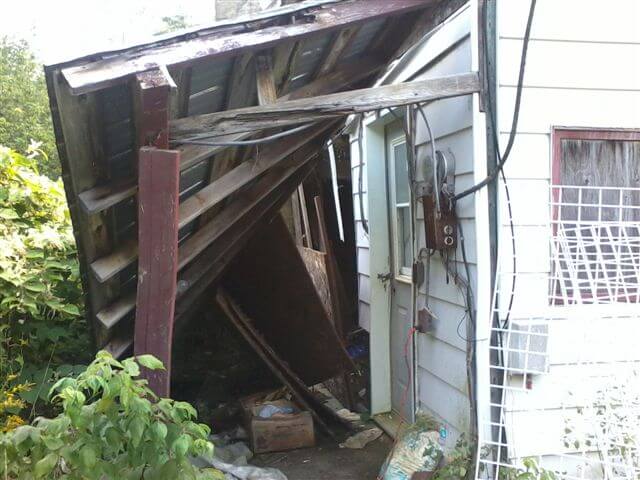
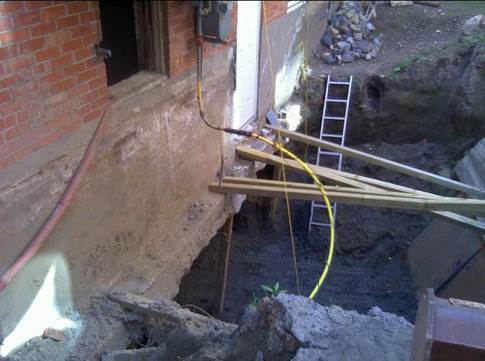
Here are some examples of electrical installations that do not meet the minimum clearance or height requirements, or are unsafe.
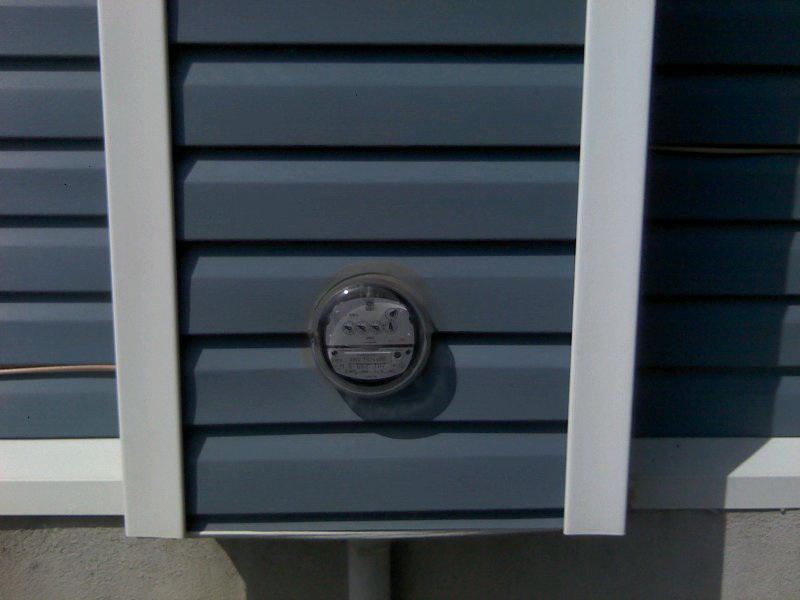
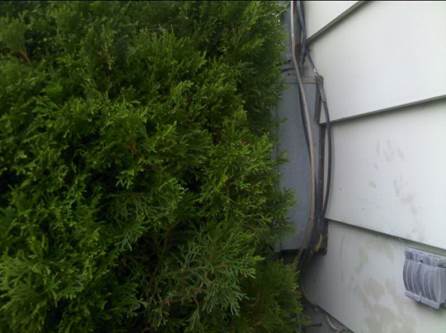
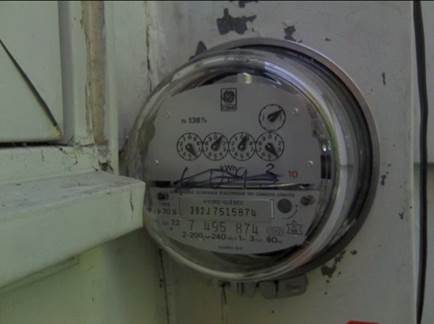
A supplier who is required to follow Hydro‑Québec's strict procedure is responsible for recovering and recycling the materials in the old meters.
This process includes disassembling the meters so that each component can be recovered or recycled. All meters are recycled using this procedure.
Radiofrequencies
Communicating meters meet all applicable standards issued by the competent regulatory bodies, including Health Canada, an organization that sets safety limits for radiofrequency exposure.
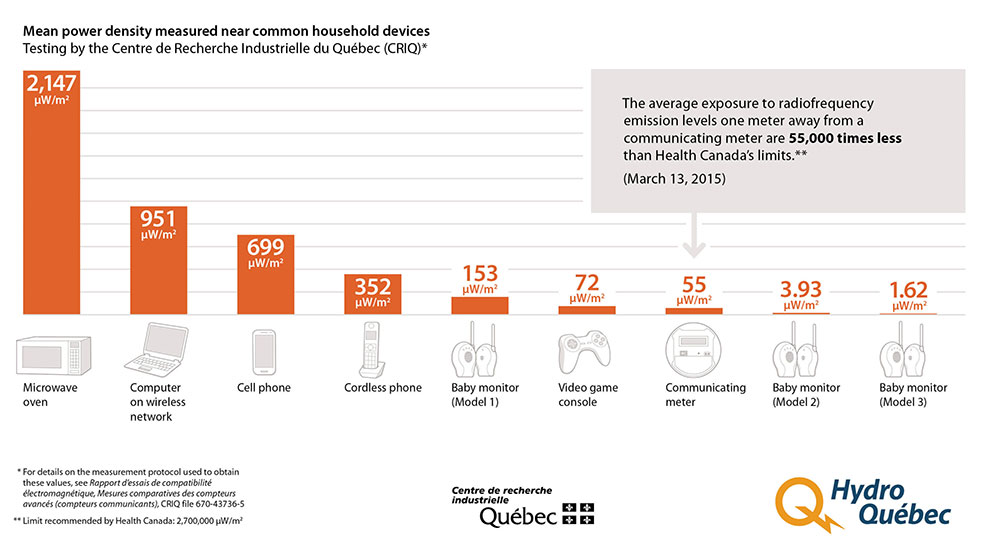
The table below compares the radiofrequency emission levels of various common devices against those of a communicating meter, using data provided by the Centre de Recherche Industrielle du Québec (CRIQ). In the case of the communicating meter, exposure levels were measured from a distance of one metre.
Radiofrequency exposure levels
Key facts to remember:
- Radiofrequency (RF) emission levels measured one metre away from a communicating meter are well below Health Canada limits (55,000 times lower).
- Exposure to radiofrequency emissions one metre away from a communicating meter is minimal compared to that from other devices.
A radiofrequency meter is an electronic meter that can be read from a distance, either by a meter reader carrying a handheld computer or by a communications network such as the one set up by Hydro‑Québec. The radiofrequency technology used in the meters is not new and is widely used in other devices, such as baby monitors and cordless phones. Hydro‑Québec has three main types of radiofrequency meters:
-
458 MHz meters
The 458 MHz meter transmits only when the meter reader is nearby. The meter reader's handheld computer sends a signal to wake up the meter, and the meter responds by sending its consumption data. Once the meter reader is back at the office, the data is transmitted to Hydro‑Québec's billing system.
There are very few meters of this type left in Hydro‑Québec's fleet, and they haven't been manufactured for many years now.
-
900 MHz meters
The 900 MHz meter transmits periodically, whether or not there is a meter reader nearby. When close to the meter, the meter reader collects data using a handheld computer. Once the meter reader is back at the office, the data is transmitted to Hydro‑Québec's billing system.
-
Communicating meters
The communicating meter records customers' electricity consumption and allows Hydro‑Québec to read the data remotely without the need for a meter reader. Communicating meters emit radiofrequency energy intermittently several times a day, for a few milliseconds each time. Generally, total emission time is less than 90 seconds a day. Communicating meters are the current industry standard.
To transmit the recorded data, communicating meters emit radiofrequency energy intermittently several times a day, for a few milliseconds each time. Generally, total emission time is less than 90 seconds a day.
It's important to know that the radiofrequency exposure levels at a distance of one metre from the communicating meter are approximately 55,000 times lower than the threshold recommended by Health Canada.
Health Canada says that "in cases where multiple smart meters are installed together, as in some townhouses or high‑rise buildings, the total exposure levels from multiple smart meters will still be far below Health Canada's RF energy exposure limits, due to the infrequent nature of transmissions."
In December 2011, after a technical survey of communicating meters, Health Canada concluded that "exposure to RF energy from smart meters does not pose a public health risk."
No. Health Canada says that "in cases where multiple smart meters are installed together, as in some townhouses or high‑rise buildings, the total exposure levels from multiple smart meters will still be far below Health Canada's RF energy exposure limits, due to the infrequent nature of transmissions."
No. Tests conducted by Hydro‑Québec and Medtronic, the world's largest supplier of pacemakers, in conjunction with the Montreal Heart Institute, have confirmed that the radiofrequency emissions from communicating meters do not interfere with the operation of these devices.
In fact, no interference was observed when the Medtronic pacemakers and ICDs were placed as close as possible to communicating meters manufactured by Landis+Gyr, Hydro‑Québec's main supplier, even though the meters had been intentionally modified to emit radiofrequencies at an abnormally high rate.
Liability
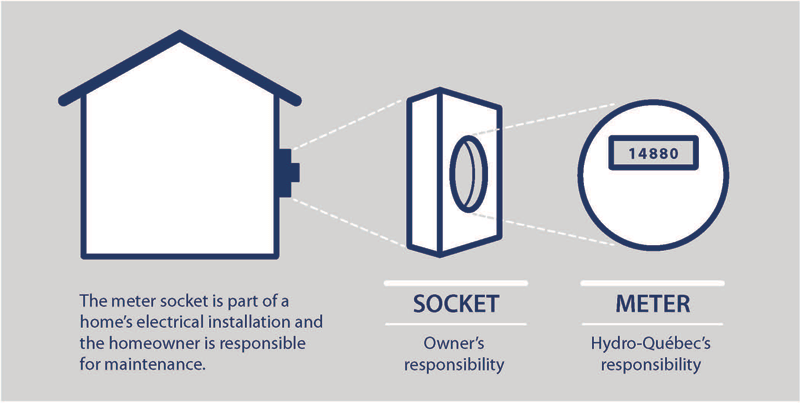
The meter belongs to Hydro‑Québec. However, the socket into which the meter is inserted is the customer's responsibility.
Technology
Yes. The meters comply with the standards issued by competent regulatory bodies, including Measurement Canada, which sets the standards of precision for measuring instruments, such as meters, and oversees their application.
No. Although the old meters are still reliable, Hydro‑Québec's meters must be replaced before the end of their service life. Measurement Canada imposes strict rules on companies to guarantee the precision of the measurement systems they use. Hydro‑Québec is therefore required to install meters that will enable it to meet those standards, for the duration of the meters' service life.
Hydro‑Québec only collects electricity use data for billing purposes. Customers' personal information, such as name, address and telephone number, is not sent through the various components of the network.
Hydro‑Québec uses electricity use data from meters to improve service, especially during outages.
The power of communicating meters is 425 mW (milliwatts), or 0.425 W, which is equivalent to that of an LED Christmas light.
Any device that operates on the 902‑to‑928 MHz band and uses digital transmission technologies must meet Industry Canada standard CNR‑210, so it is designed to neither cause nor suffer from interference.
Some older devices, however, use the older analogue technology, which is being phased out. Although they are compliant with the abovementioned standard, they may, in rare circumstances, suffer from interference caused by other devices operating in the same frequency band.
The communicating meters emit radiofrequencies in the 902‑to‑928 MHz band, the same one used by baby monitors.
Certification testing for meters complies with the strictest international standards and falls into three categories: electromagnetic compatibility testing, climate testing and mechanical testing.
All telecommunications hardware undergoes thorough climate testing.
The meters are therefore compliant with Measurement Canada requirements and Hydro‑Québec certification standards.
No. Hydro‑Québec is required to comply with Measurement Canada standards respecting the quality of electricity meters that operate throughout the year. As part of the certification process, the communicating meters undergo a test involving sudden, extreme temperature changes. This test is used to confirm their ability to withstand Québec's harsh winters.
Communicating meters have a service life of 15 years. As is the case with the old meters, whether electromechanical or electronic, their actual service life could be longer; sampling tests conducted in a few years should tell us. Given the changes made to Measurement Canada standards, the service life of a meter installed today could be as long as 30 years.
Meter-reading
NB: If a communicating meter is installed, you don't need to read it, because the electricity‑use data is automatically transmitted to Hydro‑Québec every day.
Because the meter reader was unable to access the meter. This card shows you how to take a reading and send us the information. Your bill can be established according to your actual consumption.
Once a year, you will receive a letter indicating the dates on which you can send us the meter‑reading. This letter also tells you how to send us the information. By transmitting your meter‑reading on the scheduled dates, your bill can reflect your actual consumption.
You can submit your reading as soon as you receive the card or according to the dates stated in the letter you have received. It's important to do so promptly, to make sure your next bill reflects your actual consumption.
If we don't receive your meter‑reading, your next bill will be based on your estimated consumption. Your bill won't be adjusted until the meter reader is able to access the meter, so that will be at least two months.
By submitting your meter‑reading online at hydroquebec.com/meter_reading, you'll prevent any delays in processing. Then your next bill will reflect the amount of electricity you've actually used.
No. You can give us your meter‑reading by phone. Follow the instructions on the card left behind by the meter reader or in the meter‑reading letter you receive once a year.
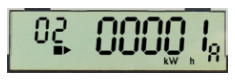
There are two 5‑digit series that flash alternately on your meter.
The first 5‑digit series follows the code 02 and the next 5‑digit series follows the code 05.
Take these numbers down, including the zeros. For example, if your meter displays 00001, you must write 00001.