What is solar power?
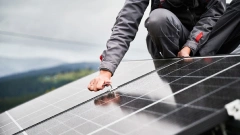
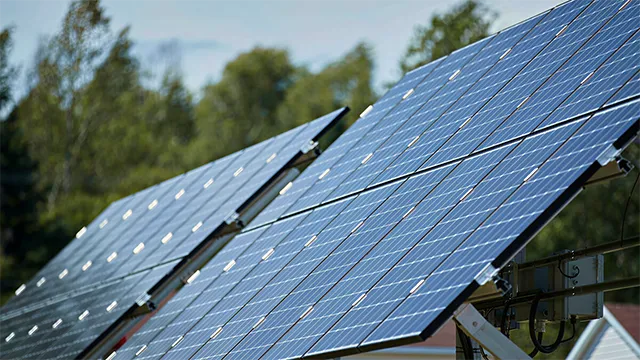
Photovoltaic panels, more commonly called solar panels, capture the sun's energy to generate electricity. This clean, renewable power can help you:
- Lower your electricity bill
- Diversify your energy sources
- Enhance your building's self-sufficiency
The potential of solar power in Québec
Southern Québec has significant solar potential, on par with other regions of the world. But hours of sunlight alone aren't enough to predict generation. Several factors such as panel orientation and tilt, the sun's height, cloud cover and snow can affect performance.
In Québec, every kilowatt of installed capacity can generate an average of 1,200 kWh per year, totalling about 6,000 kWh for a 5‑kW installation.
How it works and specifications
Solar panels are made of cells that transform sunlight into electricity. An inverter then converts this energy so it can power your building and devices. If your installation is connected to Hydro‑Québec's grid, you can use the energy you generate and feed any surplus back into the grid to receive credits through the Net Metering Option.

Types of panels and cells: Understanding the differences
Not all solar panels use the same technology. Depending on the type of panel and cells used, performance, appearance, durability, and cost can vary. Here is an overview of the main options to help you choose the solution best suited to your project.
- Monofacial panel: captures sunlight only on the front side facing the sun.
- Bifacial panel: captures sunlight on both sides (front and back) using light reflected from the ground and surrounding surfaces.
- Photovoltaic thermal collector (PVT): combines electrical generation (photovoltaic) and heat (thermal). The front generates electricity, and the back recovers heat from the cells or the sun.
- Monocrystalline cell: made from a single silicon crystal. Uniform appearance, often black.
- Polycrystalline cell: made from several silicon crystals fused together. Slightly grainy surface with a bluish tint.
- Thin‑film cell: made by depositing very thin layers of materials onto glass, plastic or metal. May be flexible and have a uniform appearance, which is often dark and semi‑transparent.
Advantages and considerations
Advantages
- Energy independence
- Opportunity to earn credits on your electricity bill
- Increased property value
- Environmental benefits
- Low maintenance costs
- Long service life (20 to 30 years)
- Access to a stable energy source year after year
- Large number of potential installation sites (buildings, parking lot sunshades, vacant lots, etc.)
Important considerations
- First, ensure the potential site is suitable for a solar project by reviewing the best practices guide.
- Have your project assessed by a qualified professional.
- Before purchasing any equipment, have a master electrician or engineer submit a connection request to Hydro‑Québec. You must receive conditional approval before proceeding. See detailed information.
- Customers supplied by a municipal power system must obtain prior written authorization from the municipality and attach it to the request they submit in the LogisVert portal or OSE tool.
- Once you receive official authorization from Hydro‑Québec, you can submit the grant application.
Potential savings
The savings depend on factors such as your electricity use, the amount of sunlight and the size of your system. To support this aspect of the energy transition, we've launched several initiatives to make solar power more accessible, including a grant that shortens the payback period from 25 to 30 years to 10 to 12 years by 2035.