
Wind power
With the demand for electricity on the rise, wind power, developed in partnership with local communities, will play a key role in meeting Québec's energy needs and accelerating the energy transition.
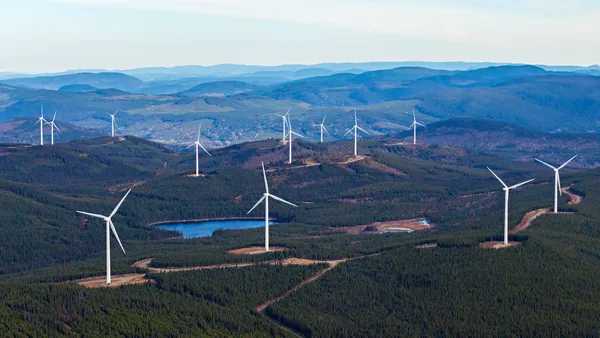
Why develop wind power in Québec?
Québec has embarked on an ambitious energy transition that's aimed at replacing polluting energy sources with renewable ones, while also meeting a rapidly growing electricity demand. To get there, we must substantially increase our renewable energy generation in the coming years. As outlined in its Action Plan 2035, Hydro‑Québec will play a leading role by adding over 10,000 MW of wind power, which is equivalent to the electricity use of some two million households. Wind power is therefore becoming an essential solution to support Québec's decarbonization and ensure a reliable energy supply for the future.
Wind power and Québec's energy future

This video explains how wind is transformed into electricity using wind turbines. It presents wind farms, their siting, their integration into Hydro‑Québec’s power grid, and their role within Québec’s energy landscape while contributing to regional vitality.
1-minute video
Advantages of wind power
Wind power is a natural fit in Québec's changing energy system: a renewable resource whose growing contribution helps us diversify our energy sources and keep pace with evolving needs.
-

Complementary to hydroelectricity
Wind turbines reduce the need to draw on the water in our reservoirs, while hydroelectricity keeps generation stable at times when the winds are low.
-

High output in winter
Strong winds and the higher density of cold air increase wind turbine output, helping to meet high winter demand.
-

Rapid deployment
A wind power project can be completed in five to seven years, which is about half the time needed for a hydroelectric project.
-

Competitive costs
The operating costs of a wind farm are relatively low after initial installation, making wind power an energy resource that is cost‑effective in the long term.
A complementary energy source that diversifies our production
Successfully bringing about the energy transition and meeting the growing demand for electricity entails reducing our reliance on fossil fuels as we increase our use of renewables. Wind power's many advantages will ensure it a key role in that shift.
3-minute video
Did you know?
We've been developing wind power for over 25 years. The first wind farm was installed in Gaspésie in 1998, with 76 turbines, each with a capacity of 750 kW. Since then, we've gained considerable expertise in integrating wind power into the grid.
Key figures
45 wind farms active in Québec
4,000 MW of installed capacity to supply the equivalent of 721,000 households
+10,000 MW of new wind power generation by 2035, enough to meet the energy needs of some two million households
A new development model focused on collaboration
May 2024 saw us rethink our approach to wind power development to better support the large-scale deployment required for the energy transition. Under the new model, Hydro‑Québec will serve as principal contractor, taking active part in project planning, development and delivery. This approach supports a comprehensive vision, better coordination with partners, and harmonious integration into the surroundings.
We are working closely with the MRCs, municipalities, and local and First Nations communities — all of whom can choose to become project partners — to keep development consistent and aligned with local priorities. This approach helps create sustainable projects that fit naturally into their surroundings, create jobs, generate stable income and offer lasting benefits for the communities they serve while supporting Québec's decarbonization.
Our model is based on a hybrid approach that combines our own expertise with private-sector agility:
- Major projects (installed capacity of at least 1,000 MW, in general), developed by Hydro‑Québec in partnership with the MRCs and Indigenous communities, who are involved from the very start.
- Tendered projects (installed capacity of up to 350 MW, in general) delivered by private developers selected through a bidding process (in French only).

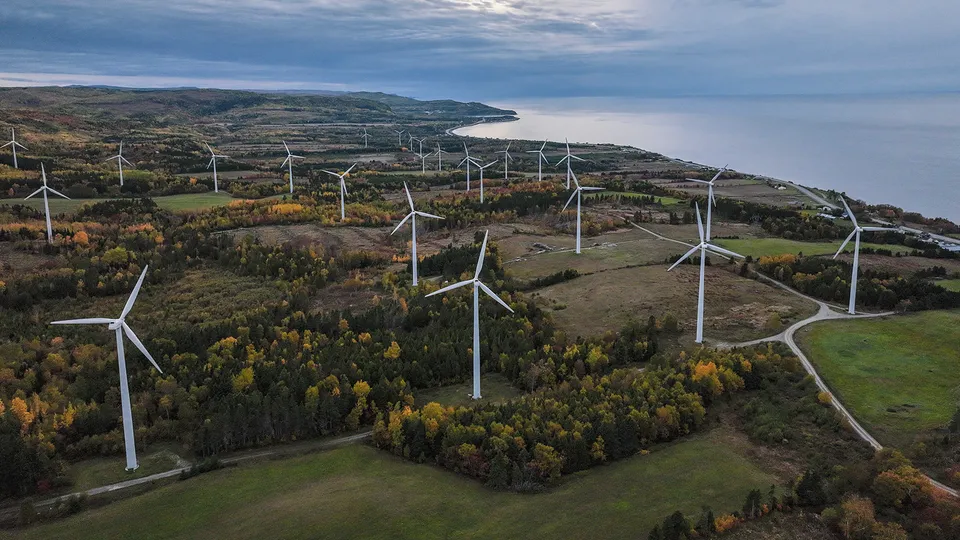
Québec wind farms
Explore the map of wind farms in Québec—whether they’re in the planning stages, under construction or in operation.
Developing projects that blend harmoniously into their host environments
Each proposed project is subject to particular scrutiny to ensure its harmonious integration into its surroundings. This process involves multiple public consultations and a rigorous environmental assessment aimed at understanding community concerns, protecting the natural environment and adapting our projects to local realities. For more information about our process, including the step‑by‑step progress of individual projects, click on the link below.
Press releases
- Wind power development: A historic partnership for eastern Québec
- Une nouvelle entente majeure pour le développement énergétique dans l'Est du Québec [in French only]
- Zone Gespe'gewa'gi in Gaspésie and eastern Bas‑Saint‑Laurent [in French only]
- Nutinamu‑Chauvin area in Saguenay‑Lac‑Saint‑Jean [in French only]
- Wocawson area in southwestern Bas‑Saint‑Laurent [in French only]