
Environmental assessment process
All of our construction projects are designed to reduce their impacts on the environment and on communities. We follow a rigorous process, recognized in Québec and elsewhere, that follows the law and protects nature. Nothing is left to chance.

On this page:
Why an environmental assessment is essential
An environmental assessment is used to identify the communities’ concerns about the project, particularly those related to nature, so that we can take them into account when designing our projects. The assessment helps us make informed and responsible decisions. Our objective is to carry out projects with the least possible impact on the environment and nearby residents. Each project is designed in compliance with all applicable laws.
The environmental assessment process is designed to:
- Understand the natural and human environments
- Anticipate possible impacts
- Find solutions to reduce those impacts
- Maximize positive spinoffs
What is involved in an environmental assessment?
An environmental assessment is a long process that can last several months or even years. It includes several activities, such as:
- Identifying the area that will potentially be affected by the project (the study area)
- Analyzing technical, environmental and social constraints
- Public consultation
- Assessing and comparing any options
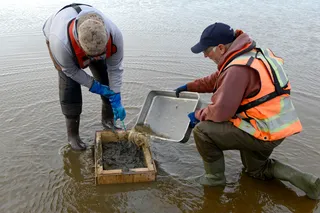
- Carrying out inventories and surveys
- Assessing the potential impacts
- Establishing mitigation measures
- Drafting the impact study or the environmental assessment
Collective expertise
Dozens of experts participate in the environmental assessments and impact assessments, representing the fields of biology, geography, anthropology, archaeology, forest engineering, acoustics, etc. We also work with external firms and local communities. It’s a team effort requiring rigour and transparency.




Analysis and official decision by government
Following the environmental assessment process, the reports are sent to the Ministère de l'Environnement, de la Lutte contre les changements climatiques, de la Faune et des Parcs (MELCCFP ). The MELCCFP verifies whether the documents are complete and in compliance with all requirements.
For projects subject to the environmental impact assessment and review procedure, the MELCCFP mandates the Bureau d'audiences publiques sur l'environnement (BAPE ) to hold a consultation. The BAPE studies the project impartially and shares its recommendations with the government. Based on those recommendations, the government makes its official decision—the project is either authorized (with or without changes or under certain conditions) or refused.
Follow‑up once new structures are in operation
Once the project has been carried out and the new structures are in operation, we follow up on their environmental impacts. This follow‑up is designed to verify that the mitigation measures are effective and adapted to the context. If necessary, we adjust them to limit the effects of the new facilities on the environment and nearby communities.