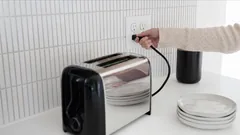


Trimming a hedge, cleaning the gutters, or cleaning the pool . . . When doing yard work, it’s easy to forget that power lines are never far away. Here are five tips to help you develop good habits and stay safe when doing your outdoor work.
1. Identify power lines, both overhead and on the ground
We tend to look straight ahead or down at the ground, but we must remember to look up. Although some power lines are clearly visible, others blend into the foliage of trees, run along a building, or hang over a hedge without being noticed. Before you begin your work, make sure you know exactly where all the power lines around you are. That way, you can choose the right tools and adjust your approach to work safely.
If a task seems risky and there are power lines nearby, it’s best to call a professional arborist authorized by Hydro‑Québec .
The golden rule: Always stay at least 3 metres away from power lines.
To stay safe and avoid a serious or even fatal electric shock, the key is to always stay at least 3 metres away from power lines at all times. This applies not only to you, but also to your tools and maintenance equipment, which can conduct electricity.
2. Anticipate your movements and secure your work area
Using a ladder or telescopic tools makes it easier to access the work area, but it also brings you closer to power lines. To stay safe, the key is to prepare your work area properly: make sure your ladder is resting on level, dry ground to prevent it from slipping. Get into the habit of visualizing the full path of your tools before you move. By planning your movements, you maintain full control over your equipment, even in the event of a gust of wind or a sudden misstep.
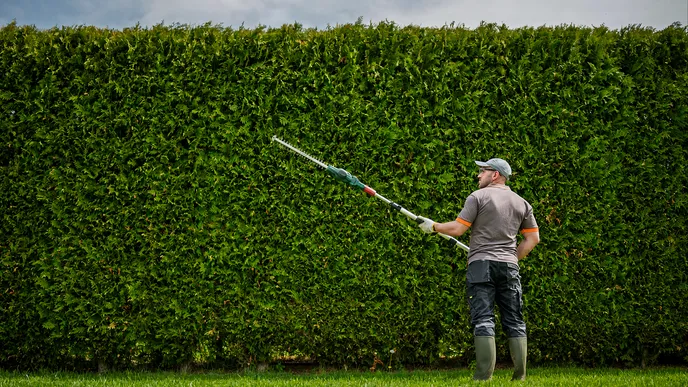
3. Use non-conductive tools and equipment
Aluminum ladders, rebar, metal stakes or metal hedge trimmers: many outdoor maintenance tools and pieces of equipment conduct electricity. To stay safe while working, remember to:
- Always use non-conductive tools or materials, such as a fibreglass ladder, when working near power lines.
- Carry your long tools horizontally to maintain a safe distance of 3 meters from power lines.
- Never set up your equipment under a power line, especially if it is less than 3 metres away.

Did you know?
Electrical-insulating gloves and boots with dielectric soles provide extra protection against the risk of electric shock and can reduce the risk of serious injury in the event of contact.
4. Check what’s under your feet before digging
Not all electrical cables are above ground. Some are buried, sometimes at shallow depths. Before digging to install a pool, a fence, or any other structure, or to plant a tree, submit a locate request to Info-Excavation . It’s a free service.
5. Work in a dry environment and use the right equipment
Water is an excellent conductor of electricity. Whether you’re working on grass damp with dew, using an extension cord on a wet surface or working near a pool, it’s important to prepare your work area properly to work safely. Here are a few tips:
- Wait until the ground is dry before starting your work or wear appropriate footwear.
- Avoid using power tools when the air is very humid or foggy.
- Use outdoor outlets protected by a ground-fault circuit interrupter (GFCI).
- Check your extension cords to ensure the casing isn’t cracked or damaged.
- Choose extension cords designed for outdoor use, as they are built to withstand temperature fluctuations.
Good habits to develop: Take your time and double-check
Haste and distraction are often the enemies of work done well and safely. Take the time to perform the necessary safety checks and make sure you have enough time to focus on the task at hand. And don’t hesitate to call in professionals when needed! These simple yet essential habits are your best guarantee for successfully completing your outdoor projects—and enjoying them to the fullest!