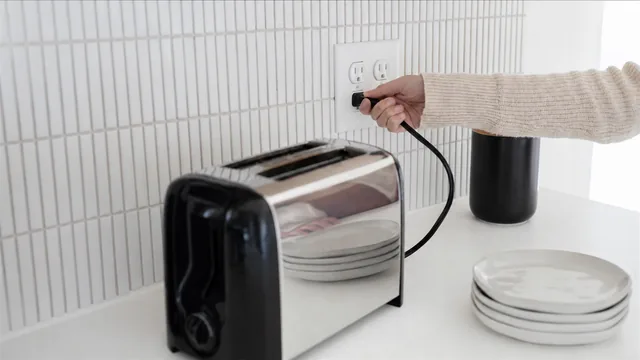


For young kids, home is a whole world to discover – they are curious about everything! Toddlers touch, pull, chew, put things in their mouths and get close to electrical sources without any idea of how dangerous it can be. To prevent accidents, safety measures need to be in place, in every room. Here’s a room-by-room look at best practices.
Child’s bedroom
A bedroom often feels like a haven, but it can still pose electrical hazards. Accessible outlets, night‑light cords and devices that are plugged in can easily attract a toddler’s attention.
Keeping a child’s bedroom safe:
- Electrical outlets: use CSA‑ or UL‑certified outlet covers to prevent children from inserting objects.
- Night lights: opt for LED models with an insulated housing and no exposed wires.
- Furniture: keep furniture away from outlets and cords, especially if children can reach or pull on them.
Extra tip: For added protection, consider installing tamper‑resistant receptables (TRRs). These CSA‑ and UL‑certified outlets feature built‑in shutters that only open when a plug is inserted. They’re a simple and effective way to prevent accidents, especially in bedrooms and play areas.
Kitchen
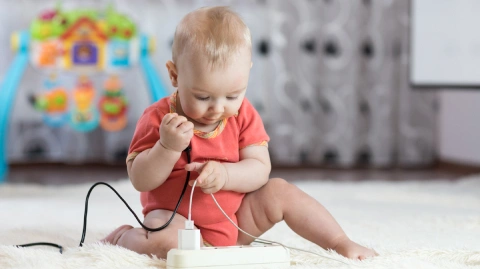
The kitchen is a busy hub, but it also comes with hazards like water, heat and electrical appliances. The sounds and smells often draw children in, increasing the chance of accidents.
Keeping the kitchen safe:
- Appliances: keep small appliances and their cords out of reach and unplug them after use.
- Cords: use cord shorteners or fasteners so cords don’t dangle from the counter.
- Outlets: install ground fault circuit interrupter (GFCI) outlets, especially near the sink.
Bathroom and laundry room
These two rooms both present a hazardous combination: water and electrical appliances. In the bathroom, curious little ones may reach for devices left near the tub or sinks. In the laundry room, it’s very important to secure large appliances like the washer and dryer.
Keeping the bathroom and laundry room safe:
- No devices plugged in near water: even hair dryers and radios should be kept well away from tubs and sinks.
- Protected outlets: outlets in areas near water must have GCFI protection, as required by the Canadian Electrical Code.
- Heavy appliances: ensure the washer, dryer and freezer are stable and that cords are out of children’s reach.
- Constant supervision: never leave a child in the bathroom when there are electrical devices within reach.
Living room
The living room is a space for fun and downtime, but it’s also full of plugged‑in electronics. Exposed cords and power bars can be especially tempting to toddlers.
Keeping the living room safe:
- Power bars: choose models with a switch and surge protection.
- Cord covers: keep cords safe with covers that blend into the décor.
- TV and consoles: secure the devices to a wall or place them on sturdy furniture to prevent tipping if a child pulls on the cords.
And in the basement?
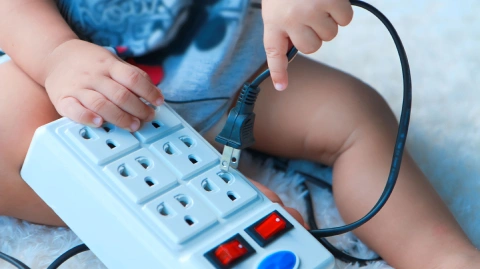
The basement is often overlooked, but it deserves careful attention. Electrical systems there may be older or less well maintained. Many basements serve multiple purposes–playroom, workshop, storage area–that each involve risks from cords, outlets and unsecured devices.
To keep the basement safe, make sure outlets are properly grounded, cords are in good condition and areas accessible to children are safely organized. If the basement doubles as a playroom, follow the same safety practices as in the rest of the home.
Summing up
Each room has its own electrical safety challenges. By taking simple, tailored precautions, you can reduce risks and create a safer environment where young children can explore with confidence.