

The ice near dams may seem solid and ideal for fishing, snowmobiling or hiking. But beware: this ice is never as solid as it looks. And each year, lives are put in danger because of a lack of caution.
Appearances can be deceiving
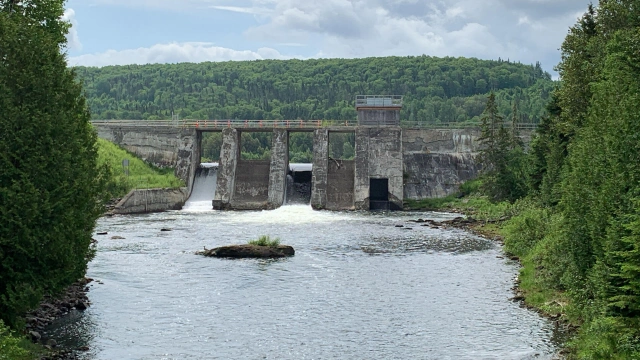
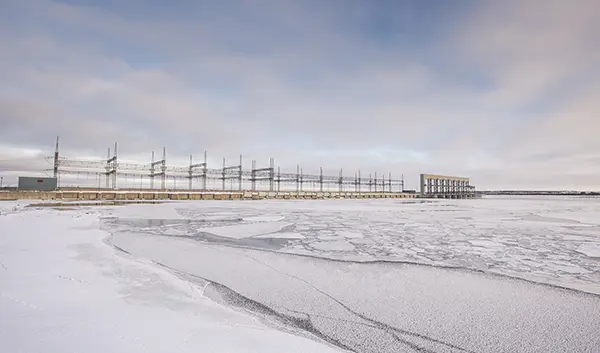
Unlike the still water in lakes, the water near dams is constantly in motion. The turbines and gates modify its flow, creating areas where the ice is thin or even non-existent. In just a few metres, the ice can go from being a solid surface to very thin.
Imagine: You're riding your snowmobile and enjoying the sound of the crunching snow . . . until all of a sudden, the ice gives way. There were no warning signs.
Depending on electricity demand and weather conditions, the water level near dams can change quickly. These fluctuations can crack the ice, making it unsafe, or even break it. What seemed safe in the morning can become dangerous within a few hours. What's more, even when it's very cold, the currents created by the facilities prevent the formation of a uniform ice cover. One step too far can mean falling into icy water. Even experienced outdoor enthusiasts can be fooled and lose their lives as a result.
Obey safety signs!
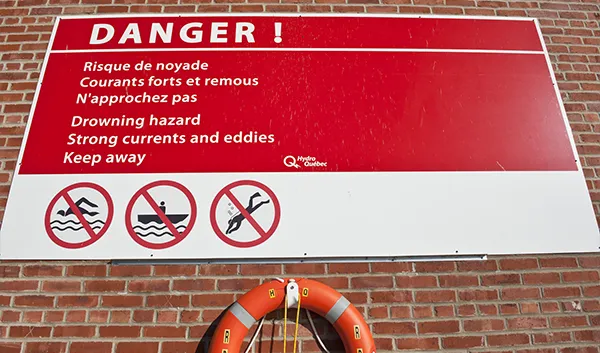
Signs, fences and audible and visual alarms are not there for decoration—they are critically important. Ignoring them means running the risk of drowning.
Each winter, we carry out more and more safety operations with snowmobilers and fishers who venture into dangerous areas to warn them about the risks they face. In short, keep away from dams—your safety depends on it!