


Is there a solution that helps businesses and organizations lower their electricity bills while contributing to Québec’s energy transition? Yes!
Hydro‑Québec’s Demand Response Option (DR Option) gives businesses and organizations the opportunity to earn credits on their electricity bill by lowering their consumption during winter peak demand events.
Why make the move?
Boost competitiveness
Choosing the DR Option means combining financial support and annual credits earned through effective participation in peak demand events while generating cash flow from the very first year. These funds can be reinvested in additional energy efficiency measures or used to finance support services that maximize their results. That’s what makes the DR Option a smart, sustainable strategy.
Optimize power system performance
With Québec’s electricity demand expected to double by 2050, energy efficiency solutions like the DR Option are essential.
In winter 2024, the 1,800 customers who signed up for the Demand Response (DR) Option received a total of $52 million in credits applied to their electricity bills.
It's about working together!
Working together to use less electricity helps limit imports, keeping rates affordable and reducing reliance on non-renewable energy sources. It also supports the electrification of Québec’s economic sectors.
The DR Option is a cost‑effective solution that enables businesses to do their part in the fight against climate change.

Demand Response Option: An effective energy solution
Testimony from the Montreal Heart Institute
The Montreal Heart Institute earned a $55,000 credit on its electricity bill in its very first year of enrolment in the DR Option, as well as more than $100,000 in financial support to install energy efficient equipment that it couldn’t have purchased otherwise.
Find out more [In French only]
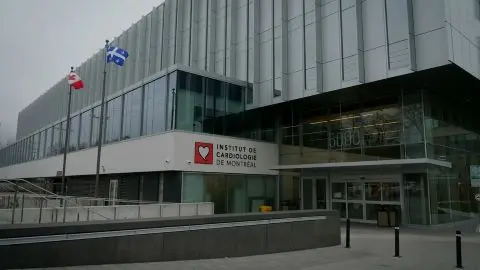
"We implemented the necessary measures to manage our power demand optimally, with minimal manual intervention,” says Mr. Simon‑Charles Fontaine. “This transition is seamless for patients and staff, but the benefits are very real."
What’s a winter peak?
In Québec, most homes and commercial buildings rely on electricity for heating. When temperatures drop, we all use a lot of electricity at the same time. Significant spikes in demand often occur in the mornings and evenings (between 6 and 9 a.m. and 4 and 8 p.m.), when we’re heating and using energy‑intensive appliances.

Those spikes are called winter peaks. Winter peaks tend to happen between December 1 and March 31. Peaks can also take place when severe weather damages power lines and causes temporary outages.
Rest assured, Hydro‑Québec can meet the demand. However, over the past few years, it has had to make substantial investments to maintain the grid’s robustness. Hydro‑Québec sometimes also has to purchase electricity that’s more expensive and generated from non-renewable sources on neighbouring markets. That’s why it’s important to help flatten consumption peaks by spreading out demand more evenly.
Tangible results
Read the testimonials from companies and organizations that benefited from our expertise and made significant savings thanks to our energy efficiency programs or rate options.