

Four keys to understanding your bill

No doubt about it, winter’s here! It’s normal for your electricity consumption to go up, particularly if you have electric heating, for example. It’s time to take a look at your bill, understand it and find ways to reduce your consumption. Here’s some key information to help you.

1 - Kilowatthour (kWh)

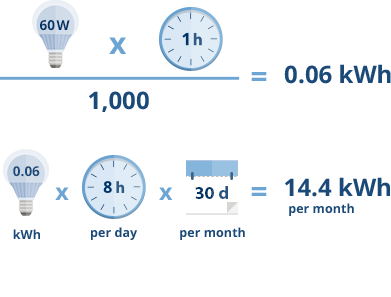
To understand electricity consumption, it’s important to be familiar with its unit of measure: the kilowatthour. It expresses the amount of energy used by a device in a given period. For example, a 60-watt light bulb uses 0.06 kWh. If the bulb is on for 8 hours a day for 30 days, it will consume 14.4 kWh.

The kWh is used to calculate the cost of the electricity you consume. The higher the number of kWh, the higher the amount on your bill. Use the Energy Performance Indicator in your Customer Space to track your electricity use hour by hour.

Visit the What’s a kilowatthour? webpage to see how much power your devices and appliances need to operate.

2 – Variance factors

Five main factors affect your electricity consumption and your bill.

As winter temperatures drop, electric heating systems get into high gear. That causes your electricity consumption to increase.

Watch this short video on winter heating to learn more (in French).

There are three ways to improve your home’s insulation:

  • Make sure the walls, roof spaces and foundations are properly insulated
  • Minimize air leaks
  • Install airtight doors and windows

There are a lot of interesting incentives to help you correct insulation problems and air leaks and replace your windows.

What’s the average shower time in your home? How many times a week do you fill the bathtub? What is the temperature setting on your thermostats?

Your habits affect your electricity consumption. A few adjustments will help lower your electricity bill without significantly changing your habits.

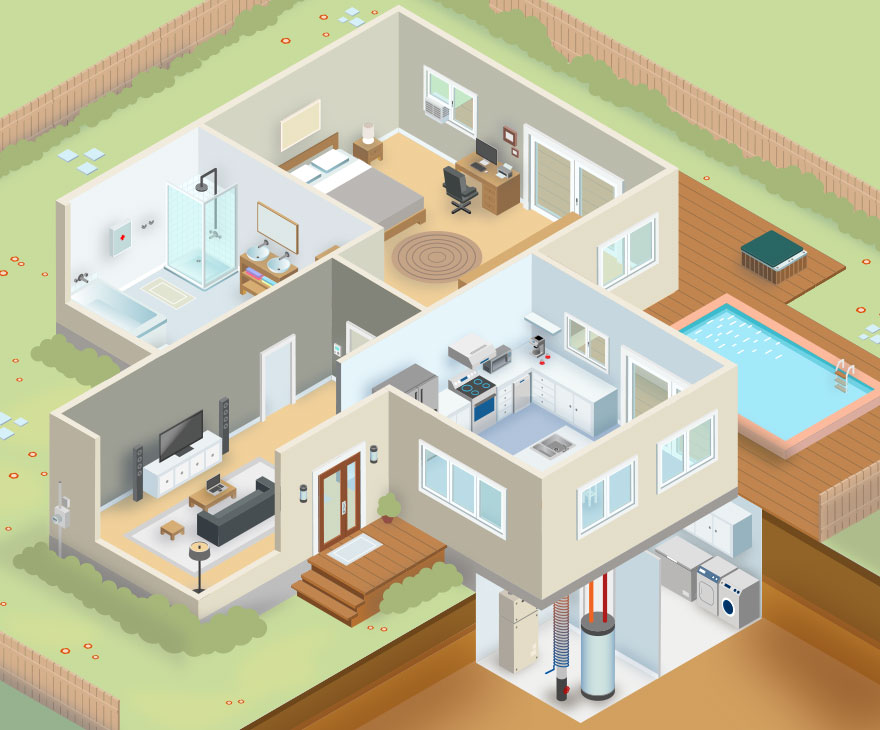
Use our interactive home to learn more about the main sources of electricity use in each room.

On one hand, the more people there are in your home, the more electricity you will use.

On the other, the number of people in your home has little impact on heating. You can save by lowering your thermostats by a few degrees at night or when you leave the house.

3 - Rate

Hydro‑Québec offers its residential customers different rates, including Rates D, DP, DM and G, as well as offers to save during winter peaks, such as Rate Flex D and the Hilo smart home service. To understand your bill, it’s important to know the rate at which your electricity is billed. For example, Rate D is the base rate for most residential customers. It also applies to agricultural operations.

Myth or fact?

With Rate D, the first 40 kilowatthours (kWh) I consume in a day are billed at the lower price, and any remaining energy consumption is billed at the higher price.

Myth

Rate D does indeed have two-tiered pricing:

  • 6.159¢/kWh for the equivalent of 40 kilowatthours per day times the number of days in the consumption period
  • 9.502¢/kWh for the remaining energy consumed

We do not bill based on your daily consumption. We take into account your total consumption during the consumption period, which is more beneficial for you.

For example, if your consumption period covers 62 days, 2,480 kWh (40 kWh per day × 62 days = 2,480 kWh) will be billed at the first-tier price. Any remaining energy consumption will be billed using the second-tier price.
More information on our rates

Finding the rate on your bill

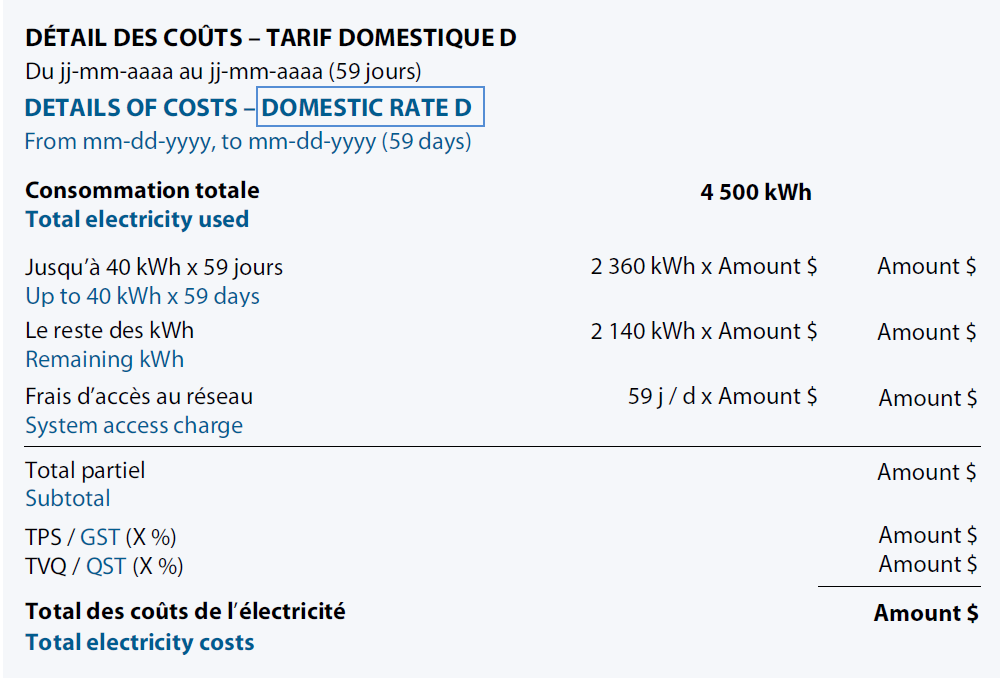
Here’s an example of a bill for a Rate D contract.

4 – Type of bill

The bill reflects your electricity consumption and differs according to each customer’s situation and preferences. Here are the types of bills you could receive:

Standard bill

This bill is issued every two months. The amount varies according to your electricity use.

Understanding your standard bill

Standard bill with an Equalized Payments Plan (EPP)

This bill is issued every month. Your monthly payments are based on how much electricity you used in the past year. You pay the same amount every month.

The EPP helps you avoid high bills in winter by spreading your annual electricity cost over 12 months. If you use more electricity than estimated, you can change your monthly instalment to avoids unpleasant surprises!

Understanding your Equalized Payments Plan

Standard bill with a payment arrangement

If you entered into a payment arrangement with us, you will receive a bill every two months. It details the payments under the agreement, including the amount owing and the upcoming installments.

We are sensitive to the fact that you may have experienced financial difficulties over the past few months. If your budget is tight, contact us through your Customer Space to enter into a payment arrangement*.

Watch a video on payment arrangements

Understanding your standard bill with a payment arrangement

Tips to help lower your bill

Now that you understand the basics, check out the list of all energy-saving tips to find more ways to reduce your electricity consumption and your bill.

Because it’s winter, let’s start with three simple tips to lower your heating costs:

  • Replace your metal or electronic thermostats with smart models. This will allow you to easily save on your heating costs.
  • Don’t heat unoccupied rooms. Lower the thermostat and close the door.
  • During winter, take advantage of the sun’s heat during the day. Let the sunshine in by opening the blinds and curtains of sun-exposed windows and keep others closed. At night, close all the curtains and blinds to keep the heat in.
  • Have a look at Hilo’s smart home service offerings to optimize your energy use.

*Some conditions apply.